

Let’s be honest. When you think of wildlife, your mind probably jumps to lions roaming golden savannahs, or dolphins leaping out of turquoise water. Nobody’s putting a poster of a blobfish on their bedroom wall. But here’s the thing, some of the strangest, most bizarre-looking creatures on the planet are also among the most remarkable. They’ve survived millions of years of evolution looking exactly like that, and they’re doing just fine.
This list covers the top 40 ugliest animals in the world, not to mock them, but to celebrate what makes them genuinely extraordinary. Beauty is a human opinion. Survival is a fact.
Whether you’re a wildlife enthusiast, a student, a curious reader, or someone who just fell down a Google rabbit hole at 2am, this guide gives you something real, detailed profiles, ecological context, surprising facts, and a fresh perspective on what ugly actually means in nature.
What Makes an Animal “Ugly” in the First Place
Before we dive into the list, it’s worth asking this question honestly. Human beings are wired to prefer symmetry, softness, and big eyes, traits that signal health, safety, and youth. It’s a cognitive bias that researchers have studied extensively. We find animals cute when they trigger parental instincts, and we find them “ugly” when they don’t.
Deep-sea creatures with no eyes, mammals with oversized noses, birds with bald heads none of these evolved to impress us. They evolved to feed, survive, reproduce, and outlast everything trying to kill them. And by that measure, many of the ugliest animals in the world are genuine masterpieces.
Conservation organizations like the Ugly Animal Preservation Society have actually built entire campaigns around this idea, arguing that biodiversity loss doesn’t only threaten the charismatic megafauna. The weird ones need protection too.
With that in mind, here are 40 creatures that prove nature has absolutely no obligation to be pretty.
The Top 40 Ugliest Animals in the World
1. Blobfish
Scientific name: Psychrolutes marcidus Habitat: Deep Pacific and Atlantic waters near Australia, New Zealand, and Tasmania
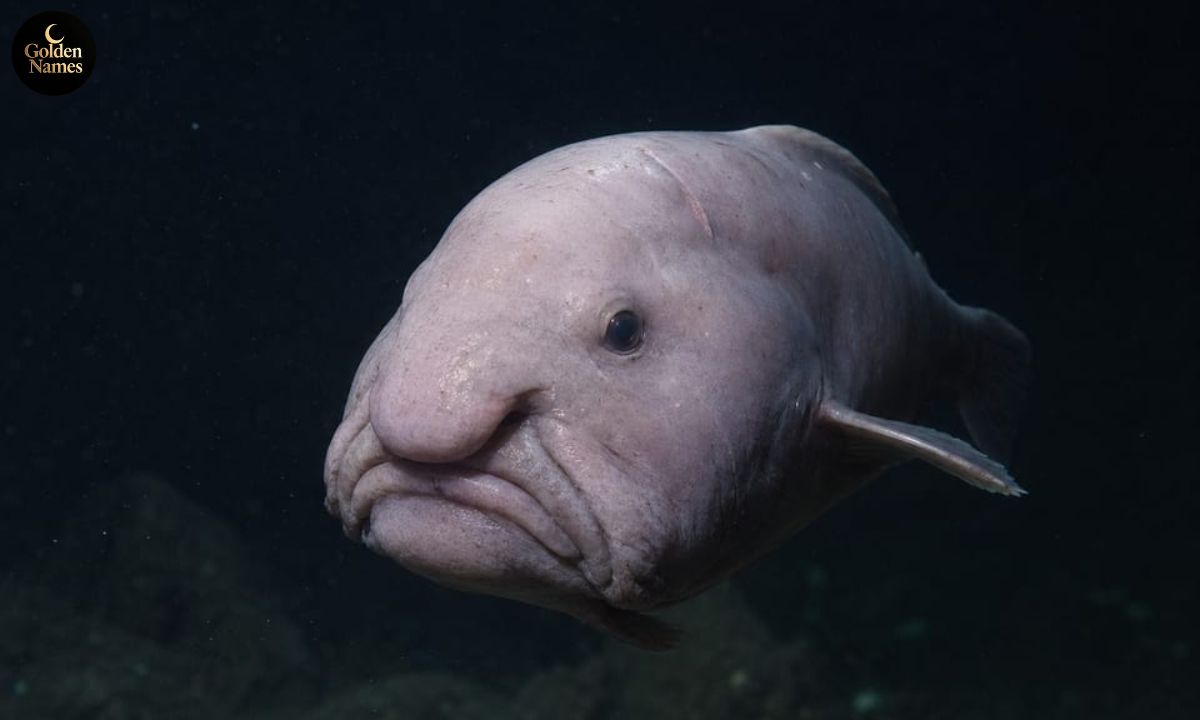
This is probably the one you came here for. The blobfish became a viral sensation after it was crowned the world’s ugliest animal by the Ugly Animal Preservation Society in 2013, and it’s held that title in public imagination ever since.
But here’s the thing most people don’t know: the blobfish doesn’t actually look like that in the wild. Down at depths of 900 to 1,200 meters, the pressure is roughly 120 times greater than at the surface. At those depths, the blobfish has a fairly normal fish shape. When it’s hauled up in deep-sea trawling nets, the sudden pressure change causes its gelatinous flesh to decompress and collapse outward, creating that sad, droopy face we all recognize.
It has no real muscle structure, which is actually a clever adaptation, in high-pressure environments, it can stay neutrally buoyant without wasting energy on swimming. It just hovers just above the seafloor and waits for food to drift within reach. Not lazy. Efficient.
Interesting fact: The blobfish is considered a vulnerable species, largely because of bycatch in deep-sea trawling operations.
2. Naked Mole Rat
Scientific name: Heterocephalus glaber Habitat: Underground tunnel systems in East Africa, primarily Kenya, Ethiopia, and Somalia
If you had to design an animal that looked like it was supposed to have skin but forgot, you’d get something close to the naked mole rat. Wrinkled, pinkish-grey, with large protruding teeth and tiny vestigial eyes, it looks like a walking thumb that made some questionable life choices.
But this animal is one of the most scientifically studied mammals on Earth. Here’s why:
- It is nearly cancer-resistant, researchers have been studying its biology for potential cancer treatment applications
- It can survive up to 18 minutes without oxygen, its cells switch to fructose-based metabolism when deprived of oxygen
- It lives in colonies with a strict caste system, led by a queen, similar to bees and ants
- Its lifespan of up to 30 years is extraordinary for a rodent its size
The naked mole rat doesn’t just look unusual, it breaks almost every rule we thought we understood about mammalian biology.
3. Star-Nosed Mole
Scientific name: Condylura cristata Habitat: Wet, low-lying areas in eastern North America
The star-nosed mole’s face looks like it collided with a sea anemone and neither party walked away unchanged. Twenty-two fleshy, pink tentacles radiate from its nose in a circular pattern, and they are in constant motion, probing the soil ahead.
Those tentacles contain more than 25,000 sensory receptors called Eimer’s organs. The star-nosed mole can process tactile information faster than any other mammal, identifying and eating prey in under 120 milliseconds. That is literally faster than the human eye can perceive.
It is functionally blind, but it doesn’t need sight. It’s the fastest-eating mammal in the world, and the tentacles do everything eyes can’t.
4. Aye-Aye
Scientific name: Daubentonia madagascariensis Habitat: Rainforests of Madagascar
The aye-aye looks like someone assembled a creature using spare parts from five different animals. It has enormous bat-like ears, glowing orange eyes, rodent incisors that never stop growing, and fingers so long and skeletal they look prosthetic. Its middle finger is especially elongated and eerily thin.
In parts of Madagascar, local communities have historically considered the aye-aye a harbinger of bad luck, which has contributed to persecution and habitat loss. This cultural stigma, combined with deforestation, has pushed it toward endangered status.
That bizarre middle finger, though, is actually a sophisticated feeding tool. The aye-aye taps on tree bark with it, listens for the hollow sound that indicates a grub tunnel underneath, gnaws an entry hole with its incisors, then uses the elongated finger to hook out the insect. It’s the primate equivalent of a Swiss Army knife.
5. Goblin Shark
Scientific name: Mitsukurina owstoni Habitat: Deep ocean waters globally, depths of 270 to 1,300 meters
The goblin shark looks like it was designed by someone who had only heard a description of a shark and had never actually seen one. Its snout is long, flattened, and paddle-shaped. Its jaw can shoot forward out of its face when attacking prey, a mechanism called protrusion, which gives it the look of a creature turning itself inside out to eat.
It is often called a “living fossil” because it is the only surviving member of the family Mitsukurinidae, a lineage that dates back 125 million years. It was first scientifically described in 1898.
We still know relatively little about it. It lives so deep that encounters are rare, and most specimens on record were caught accidentally in deep-sea fishing operations.
6. Proboscis Monkey
Scientific name: Nasalis larvatus Habitat: Coastal forests of Borneo, particularly near rivers and mangroves
The proboscis monkey has one of the most immediately striking appearances of any primate. Adult males develop enormous, pendulous noses that can grow longer than 7 centimeters and hang down past the mouth. It looks more like a caricature than a real animal.
But that nose is functional. It amplifies vocalizations, helping males communicate across the dense forest canopy. Studies suggest females are more attracted to males with larger noses, the nose is essentially a signal of genetic fitness.
It’s also an excellent swimmer. Proboscis monkeys have partially webbed feet and regularly leap from trees into rivers to cross waterways or escape predators. They are one of the few primates genuinely comfortable in water.
They are listed as endangered, with populations declining due to deforestation and hunting in Borneo.
7. Shoebill Stork
Scientific name: Balaeniceps rex Habitat: Swamps and wetlands in central and eastern Africa, including Uganda, South Sudan, and Zambia
The shoebill doesn’t look like a bird so much as a feathered dinosaur that missed the extinction event and decided to stick around. Its bill, enormous, shoe-shaped, and bluish-grey, dominates its entire face. Pair that with its blank, unblinking stare and a height of up to 1.5 meters, and you have something that feels genuinely prehistoric.
It hunts by standing completely motionless in shallow water for extended periods, sometimes hours, before striking at fish, lungfish, or even small crocodiles with explosive speed.
It is solitary by nature and fiercely territorial. Breeding pairs maintain large, widely spaced territories. The global population is estimated at just 5,000 to 8,000 individuals, making it a vulnerable species.
In Uganda, shoebill spotting tours have become a major wildlife attraction, particularly in the Mabamba Swamp near Lake Victoria.
8. Marabou Stork
Scientific name: Leptoptilos crumeniferus Habitat: Sub-Saharan Africa, particularly near water and human settlements
If the shoebill is intimidating, the marabou stork is just deeply, unsettlingly odd. It has a bald, scabby pink head, a massive bill, a dangling pink throat pouch, and a dishevelled mass of feathers that look permanently ruffled. It stands at around 1.5 meters tall and has a wingspan of up to 3.7 meters, making it one of the largest birds in the world by wingspan.
It is primarily a scavenger. The bald head is a practical adaptation, when you’re feeding inside a carcass, you don’t want feathers in the way. This earned it the nickname the “undertaker bird.
Despite its grim appearance, it plays a critical role in African ecosystems by cleaning up carrion. Without scavengers like the marabou stork, disease would spread far more readily across savannahs and wetlands.
9. Axolotl
Scientific name: Ambystoma mexicanum Habitat: Lake Xochimilco, Mexico (wild populations critically endangered)
The axolotl is one of those creatures where opinion is genuinely split. Some people find them endearing; others find the external, feathery gills waving from either side of its head genuinely disturbing. It keeps its larval features for life, a condition called neoteny meaning it looks permanently juvenile.
What makes it scientifically astonishing is its regenerative ability. It can regrow entire limbs, portions of its heart, and even sections of its brain with near-perfect fidelity. Researchers studying axolotl biology have gained significant insights into wound healing and regenerative medicine in humans.
In the wild, it is critically endangered, confined to the canal system of Lake Xochimilco near Mexico City. Habitat degradation and introduced species have devastated the wild population. Captive populations, however, are thriving in labs and homes worldwide.
10. Bald Uakari
Scientific name: Cacajao calvus Habitat: Flooded forests of the Amazon Basin in Brazil and Peru
The bald uakari looks like a small monkey that has been through something it would rather not talk about. Its head is almost entirely hairless, and its face is a bright, deep crimson, the shade of someone who just received surprising news and can’t quite recover.
That red face, oddly enough, is a health indicator. Pale-faced uakaris are generally less healthy, more susceptible to malaria, and less attractive to potential mates. The redder the face, the healthier and more genetically desirable the individual. It’s the primate equivalent of a healthy glow, pushed to its logical extreme.
Uakaris are specialized for flooded forest environments and feed heavily on unripe seeds a food source most other animals can’t digest. They’re listed as vulnerable due to hunting and habitat loss.
11. Hairy Frogfish
Scientific name: Antennarius striatus Habitat: Tropical and subtropical oceans worldwide, particularly around coral reefs
The hairy frogfish is exactly what it sounds like: a fish covered in hair-like appendages called spinules, which trail from its body and help it blend into algae, coral, and sea sponges with remarkable effectiveness. It also uses a lure, a modified dorsal spine called an esca, to attract prey, then engulfs them in a strike that takes approximately 6 milliseconds.
It cannot swim well in the conventional sense. It walks along the seafloor on modified pectoral fins, occasionally using jet propulsion by expelling water through small gill openings. It is not graceful. But it is very, very effective.
12. Anglerfish
Scientific name: Various species across the order Lophiiformes Habitat: Deep ocean, primarily below 200 meters
The anglerfish earned its reputation partly from its biology and partly from the film Finding Nemo, which correctly identified it as terrifying. The deep-sea varieties in particular, bioluminescent lures hanging above a mouth full of translucent, needle-like teeth, look designed to haunt dreams.
What is less well known is the extreme reproductive biology of some species. When a male finds a female, he bites onto her body and physically fuses with her. His circulatory system merges with hers. His organs gradually atrophy until he exists as little more than a sperm-producing appendage attached to her body. Sometimes females carry multiple males fused to them simultaneously.
It is one of the most extreme examples of sexual dimorphism and parasitic mating in the animal kingdom.
13. Hagfish
Scientific name: Various species in the family Myxinidae Habitat: Cold ocean floors globally, depths of 25 to 1,000 meters
The hagfish produces slime. Not a little bit of slime, when threatened, it releases a compound that, upon contact with seawater, expands into a thick, fibrous gel within milliseconds, capable of clogging the gills of any predator stupid enough to try to eat it. A single hagfish can fill a bucket with slime in seconds.
It also ties itself in knots, literally, to generate leverage when pulling apart carcasses or to clean the slime off its body afterward.
Hagfish are jawless and have a rather unsettling feeding method, using a circular arrangement of teeth to rasp at the flesh of dead or dying fish. They are ancient, the hagfish body plan has remained largely unchanged for 300 million years.
14. Goblin Spider (Oonops domesticus)
Scientific name: Oonops domesticus Habitat: Homes and buildings across Europe and North America
This tiny, translucent pink spider is only about 1.5 millimeters long, but under magnification it is deeply unsettling, a pale, almost featureless body with six small eyes and legs that seem too long for it. It lives in human homes and wanders at night, completely harmless and largely invisible. Most people have no idea they share their living space with dozens of them.
15. Red-Lipped Batfish
Scientific name: Ogcocephalus darwini Habitat: Galapagos Islands and around Peru
The red-lipped batfish appears to have applied lipstick before a date it ultimately regretted. Its mouth is outlined in vivid red, contrasting with its dull, bumpy body. It doesn’t swim so much as walk, using modified pectoral fins as a form of locomotion along the ocean floor.
The purpose of the red lips is not fully understood. Current research suggests they may play a role in species recognition during mating, though this remains an area of ongoing study.
16. Warthog
Scientific name: Phacochoerus africanus Habitat: Grasslands and savannah of sub-Saharan Africa
The warthog has a face that looks like it lost several arguments. Warty protuberances on the cheeks, large curved tusks, a mane of coarse hair along the back, and a general expression of barely contained exasperation. It is not conventionally attractive.
But warthogs are highly social, surprisingly fast, and genuinely resilient. They will back into burrows tail-first so their tusks face any predator attempting to follow them in. They kneel to graze, using specialized knee pads that develop over time. They can run at 48 km/h and have been documented driving off leopards when defending their young.
17. Tarsier
Scientific name: Various species in the genus Tarsius Habitat: Forests of Southeast Asia, including the Philippines, Borneo, and Sulawesi
The tarsier’s eyes are enormous relative to its body, each eye is about the same size as its brain. They cannot move those eyes; the sockets are fused in place. To compensate, they can rotate their heads almost 180 degrees in either direction, which gives them the slightly unnerving look of a creature about to do something dramatic.
They are entirely carnivorous, the only entirely carnivorous primates, feeding on insects, small lizards, and occasionally birds. They are also nocturnal and remarkably good at leaping, capable of jumping up to 40 times their own body length between trees.
18. Sunda Colugo
Scientific name: Galeopterus variegatus Habitat: Southeast Asian forests, including Malaysia, Thailand, and Indonesia
The colugo, often called the flying lemur despite not being a lemur and not actually flying, has a membrane called a patagium that stretches from its neck to the tips of its fingers, toes, and tail. When it spreads out to glide between trees, it looks like an elaborately rumpled flying blanket. When it clings to a tree trunk, it looks like a pile of wet leaves had a bad morning.
It is one of the closest living relatives of primates. Despite its alien appearance, the colugo shares a common ancestor with the group that eventually gave rise to monkeys, apes, and humans.
19. Venezuelan Poodle Moth
Scientific name: Artace sp. (possibly undescribed) Habitat: Venezuela
Discovered in 2009 and named for its resemblance to a poodle, this moth is covered in dense, fluffy white scales that give it a stuffed-toy appearance. It became a viral sensation when photographs circulated online, and debate about whether it was real or a hoax persisted for years.
It is real. And it is genuinely strange.
20. Japanese Spider Crab
Scientific name: Macrocheira kaempferi Habitat: Pacific Ocean around Japan, depths of 50 to 600 meters
The Japanese spider crab is the largest arthropod alive. Its leg span can reach up to 3.8 meters from claw to claw. Its body alone can be 40 centimeters across. When seen underwater, it moves with a slow, deliberate grace that does not match how alarming it looks.
It can live for up to 100 years. It decorates its shell with sponges and other organisms for camouflage. And despite its size, it is considered a delicacy in Japan, where it is fished commercially.
21. Thorny Dragon
Scientific name: Moloch horridus Habitat: Arid deserts of Australia
The thorny dragon is covered head to tail in sharp, conical spines, giving it an appearance somewhere between a miniature dinosaur and a living cactus. It also has a false head, a spiny knob on the back of its neck, which it tucks down when threatened so predators bite the decoy instead of the real head.
Water collection is its most remarkable adaptation. The thorny dragon can absorb moisture through its skin. Channels between its scales act as capillaries, drawing water toward its mouth from any damp surface it touches, including morning dew and wet sand.
22. Elephant Seal
Scientific name: Mirounga angustirostris (northern) / leonina (southern) Habitat: Pacific coast of North America and subantarctic islands
The adult male elephant seal has an inflatable proboscis that hangs over its mouth and amplifies its vocalizations during mating season. Combined with its enormous bulk, males can weigh up to 2,700 kilograms — and the scarring from years of territorial battles, it presents a formidable, if not conventionally appealing, image.
The nasal structure traps moisture during exhalation, helping the seal conserve water during months-long fasting periods on land. Functionally ingenious, visually overwhelming.
23. Lammergeier (Bearded Vulture)
Scientific name: Gypaetus barbatus Habitat: Mountain ranges across Europe, Africa, and Asia
The lammergeier is an enormous vulture with a wingspan of up to 2.8 meters, a rust-orange body stained by iron-rich soil it rolls in deliberately, and a set of feathers hanging below its beak that give the impression of an unkempt beard. It feeds almost exclusively on bones, which it carries high into the air and drops onto rocks to shatter, then swallows the fragments whole.
Its stomach acid is concentrated enough to dissolve bone within 24 hours.
24. Monkfish
Scientific name: Lophius piscatorius Habitat: Northeast Atlantic Ocean, from Norway to West Africa
The monkfish looks like someone took a normal fish and stepped on it, wide, flat, with an enormous mouth full of inward-pointing teeth and a lure dangling from its head. It lies on the seafloor, motionless, until prey swims close enough to be swallowed whole.
Despite its appearance, it is considered a culinary delicacy in Europe. The tail meat is firm, mild, and often compared to lobster in texture. The head, which accounts for most of its body, is typically discarded at market.
25. Aye-Aye’s Relative: The Sengi (Elephant Shrew)
Scientific name: Elephantidae (various) Habitat: Africa, primarily in rocky outcroppings and forests
The sengi, or elephant shrew, has an elongated, flexible nose it uses to sniff out insects, a nervous, twitching energy that makes it look perpetually alarmed, and legs that are disproportionately long for its small body. It looks vaguely like someone crossed a mouse with a small antelope and added a trunk as an afterthought.
Remarkably, genetic research has confirmed that sengis are more closely related to elephants than to shrews, despite the size difference of several orders of magnitude.
26. Gharial
Scientific name: Gavialis gangeticus Habitat: Northern Indian rivers, critically endangered
The gharial is a crocodilian with a long, narrow snout lined with 110 interlocking teeth. Adult males develop a large, bulbous growth at the tip of their snout called a ghara, used to produce buzzing sounds and visual displays during mating.
It is critically endangered, with fewer than 650 mature individuals remaining in the wild.
27. Camel
Scientific name: Camelus dromedarius (dromedary) / bactrianus (Bactrian) Habitat: Deserts of Africa and Central Asia
The camel’s unconventional appearance, knobby knees, leathery patches, drooping lips, and those distinctive humps, belies a creature that is physiologically extraordinary. Contrary to popular belief, the humps store fat, not water. That fat can be metabolized for energy during long desert crossings.
Camels can withstand body temperature fluctuations of up to 6 degrees Celsius, can drink up to 200 liters of water in a single session, and their oval-shaped red blood cells can continue flowing even when severely dehydrated, a trait unique among mammals.
28. Gerenuk
Scientific name: Litocranius walleri Habitat: Horn of Africa and East Africa
The gerenuk is a gazelle with an impossibly long neck and disproportionately small head. It stands upright on its hind legs to reach vegetation, using its forelegs braced against tree trunks for balance, extending its neck to browse branches no other gazelle can reach. It looks structurally implausible. And yet here it is.
29. Painted Bat
Scientific name: Kerivoula picta Habitat: South and Southeast Asia
The painted bat is vibrantly orange and black, unusual coloration for a bat, which typically opts for drab camouflage. The theory is that it mimics the appearance of dead, dried leaves or flowers from certain plants, blending into foliage despite its bright colors. Up close, its wrinkled face and large ears make it look ancient and slightly displeased.
30. Titicaca Water Frog (Scrotum Frog)
Scientific name: Telmatobius culeus Habitat: Lake Titicaca, Bolivia and Peru
This frog is perhaps the most awkwardly named animal on this list. Its nickname comes from the excessive, deeply folded skin that drapes around its body — an adaptation for absorbing dissolved oxygen from the cold water of Lake Titicaca, which sits at 3,800 meters above sea level where oxygen is scarce.
It is critically endangered, threatened by pollution, introduced trout species, and hunting for traditional medicine and food.
31. Mata Mata Turtle
Scientific name: Chelus fimbriata Habitat: Amazon and Orinoco river basins, South America
The mata mata turtle looks less like a turtle and more like a pile of dead leaves and bark that someone arranged on a turtle-shaped frame. Its flat, triangular head is fringed with skin flaps that ripple in the current, mimicking decaying vegetation. Small fish swim close, don’t recognize the danger, and disappear.
It cannot chew. It creates a sudden vacuum by opening its mouth rapidly underwater, sucking prey in whole.
32. Hippopotamus
Scientific name: Hippopotamus amphibius Habitat: Sub-Saharan African rivers, lakes, and grasslands
The hippo is not conventionally ugly, but it is often overlooked in beauty rankings. Its barrel-shaped body, enormous mouth capable of opening to 180 degrees, and the pink secretion it produces (often called “blood sweat,” though it’s actually a natural sunscreen and antimicrobial compound) put it firmly in the “striking rather than attractive” category.
It is also one of the most dangerous animals in Africa, responsible for hundreds of human deaths per year despite its herbivorous diet.
33. Saiga Antelope
Scientific name: Saiga tatarica Habitat: Eurasian steppes, primarily Kazakhstan and Russia
The saiga antelope has one of the most unusual faces of any large land mammal, a distinctive, bulbous, drooping nose that hangs over its upper lip. This structure filters out dust during summer migrations and warms cold air before it reaches the lungs in winter. Functionally elegant, visually startling.
The saiga was critically endangered just a few years ago after a catastrophic mass mortality event in 2015 killed roughly 200,000 animals in three weeks. Recovery programs have since helped populations rebound somewhat.
34. Turkey Vulture
Scientific name: Cathartes aura Habitat: Americas, from Canada to the southern tip of South America
The turkey vulture has a naked red head, like the marabou stork, a practical adaptation for reaching inside carcasses without fouling feathers, and tends to hunch its wings in a posture that looks perpetually defeated. It soars for hours on thermals with minimal wing-flapping, using its extraordinary sense of smell (rare in birds) to locate carrion from kilometers away.
Its stomach acid is so corrosive it destroys anthrax, botulism, and other pathogens that would kill most scavengers.
35. Giant Isopod
Scientific name: Bathynomus giganteus Habitat: Cold, deep waters of the Atlantic, Pacific, and Indian Oceans
The giant isopod is essentially a very large, very deep-sea woodlouse. It can grow up to 50 centimeters in length and is found on the ocean floor at depths of 170 to 2,100 meters. When threatened, it rolls into a ball, much like its terrestrial cousins.
It can survive without food for years. Scientists have documented captive giant isopods fasting for over five years while remaining alive and active.
36. Olm (Proteus anguinus)
Scientific name: Proteus anguinus Habitat: Underground cave systems in the Balkans, particularly Slovenia
The olm is a pale, nearly translucent cave salamander that has evolved in total darkness over millennia. It has no functional eyes, they develop initially but then regress and become covered by skin. It lives entirely in underground water systems, can survive a decade without eating, and lives for up to 100 years.
Its sensory systems are remarkably developed in other directions: it can detect weak electric fields, chemical signals, and pressure changes with precision.
37. Eel-Pout
Scientific name: Zoarces viviparus Habitat: Cold North Atlantic and North Pacific coastal waters
The eel-pout looks like an eel and a fish had a disagreement about identity and never resolved it. It has a long, tapered body, thick lips, and an expression of vague indifference. Unlike most fish, it gives birth to live young rather than laying eggs.
38. Lamprey
Scientific name: Various species, order Petromyzontiformes Habitat: Both marine and freshwater environments across the Northern Hemisphere
The lamprey’s mouth is perhaps its most confronting feature, a circular, jawless disc lined with concentric rings of teeth, evolved for attaching to the skin of other fish and rasping through to feed on blood and body fluids. It is genuinely ancient, having changed little in 360 million years.
In parts of Europe, particularly Portugal, lamprey is considered a traditional delicacy.
39. Frilled Shark
Scientific name: Chlamydoselachus anguineus Habitat: Deep Atlantic and Pacific waters
The frilled shark has a long, slender, eel-like body and six pairs of frilled gill slits that give its head a ruffled, otherworldly appearance. Its jaw can open extremely wide and contains over 300 teeth arranged in 25 rows, each pointing inward.
Like the goblin shark, it is considered a living fossil, representing one of the oldest shark lineages still alive.
40. Horseshoe Crab
Scientific name: Limulus polyphemus (and three Asian species) Habitat: Shallow coastal waters of the Gulf of Mexico, eastern North America, and Southeast Asia
The horseshoe crab is not actually a crab, it is more closely related to spiders and scorpions. Its domed, olive-brown shell and long, spike-like tail have changed little in roughly 450 million years, making it one of the oldest body plans in the animal kingdom.
Its blood is copper-based, turning it blue, and it contains a compound called Limulus amebocyte lysate (LAL) that is used to test medical equipment and vaccines for bacterial contamination. Millions of horseshoe crabs are harvested annually for their blood, raising significant conservation concerns.
Why Ugly Animals Matter: The Conservation Case
It would be easy to read this list and think of these animals as curiosities. But many of them are in genuine trouble, and the reasons they receive less conservation attention than more “appealing” species is a real and documented problem in wildlife management.
Research has shown that conservation funding, public interest, and media coverage are heavily skewed toward animals perceived as attractive, lions, elephants, giant pandas. Meanwhile, species like the saiga antelope, the olm, or the gharial receive a fraction of the attention despite facing equal or greater threats.
A few things worth understanding:
- Every species on this list plays a role in its ecosystem, whether as a predator, scavenger, decomposer, or prey species
- Many “ugly” animals are indicators of ecosystem health, the presence or absence of hagfish, for instance, reflects the condition of deep-sea benthic environments
- Several species here have directly contributed to medical and scientific advances, including the naked mole rat (cancer research), the axolotl (regenerative medicine), and the horseshoe crab (vaccine safety testing)
The Ugly Animal Preservation Society, founded in 2012, specifically campaigns to raise awareness of threatened species that don’t benefit from the “cute tax” in conservation funding. It’s a real issue, and awareness is the first step.
Pros and Cons of Labelling Animals as “Ugly”
Every concept has its tradeoffs, and the “ugly animal” category is no different.
Pros of the ugly animal conversation:
- It draws public attention to overlooked and understudied species
- It can make wildlife content more engaging and accessible
- It humanizes conservation messaging, people respond to humor and novelty
- It challenges the bias toward flagship species in conservation funding
- It opens discussions about how human perception shapes wildlife policy
Cons:
- Labelling can reinforce rather than challenge biases if done dismissively
- Some animals face real-world harm because of their appearance (the aye-aye, for instance, is killed because of cultural superstition)
- “Ugliest animal” rankings can feel exploitative rather than educational if not handled thoughtfully
- It oversimplifies animal biology by focusing on surface appearance
The goal, ultimately, is to move from “this looks weird” to “this is weird and here’s why that’s remarkable.” That’s the shift that actually drives conservation interest.
Practical Tips for Wildlife Enthusiasts
If this list has sparked genuine curiosity, here are some concrete ways to engage:
- Support organizations working on less charismatic species, including amphibian conservation groups and deep-sea research institutions
- If you live near coastal areas, pay attention to horseshoe crab spawning seasons volunteer opportunities exist in several US states during May and June
- Follow the IUCN Red List for updates on conservation status changes for species like the gharial, saiga, and olm
- When visiting national parks and wildlife reserves, ask guides specifically about the unusual or lesser-known species in the area, you’ll often get the most interesting stories
- Be thoughtful about purchasing seafood, many deep-sea species like the blobfish, monkfish, and giant isopod are affected by trawling bycatch
Final Thoughts
Nature doesn’t owe anyone a pleasant appearance. The animals on this list have been doing exactly what they evolved to do, often for tens or hundreds of millions of years, long before human beings existed to have opinions about them.What the top 40 ugliest animals in the world really represent is the sheer creative range of evolution, the ways life has solved problems of survival under wildly different conditions, often arriving at solutions that look bizarre or alarming to eyes calibrated for a very different kind of world.
The blobfish collapses without pressure. The star-nosed mole navigates entirely by touch. The hagfish has survived 300 million years as a slime-producing eating machine. These aren’t failures of aesthetics. They’re triumphs of adaptation.
Next time you encounter something that looks strange, sit with that feeling for a moment before scrolling past. There’s almost always a story behind it and it’s usually more interesting than the pretty ones.