

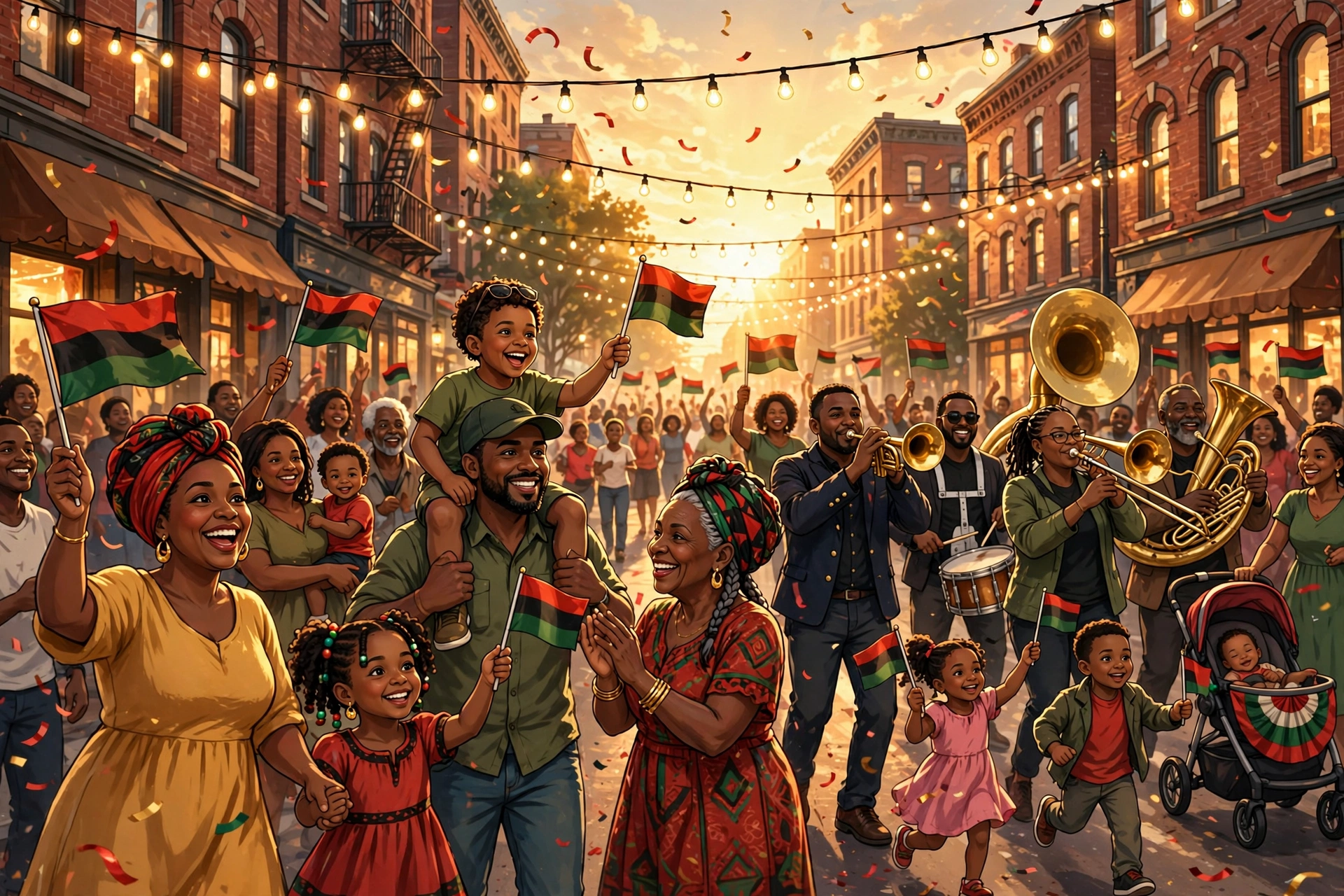
If you have seen Juneteenth on your calendar every June 19 and wondered what it is all about, you are not alone. Every year, millions of Americans search for the juneteenth meaning as the holiday approaches. The short answer is simple: Juneteenth is a federal holiday that marks the day the last enslaved people in the United States learned they were free.
But the full story is much richer than one sentence. It stretches from a Texas harbor town in 1865 to the White House lawn in 2021, and it touches the very idea of what freedom means in America. This guide explains the juneteenth meaning in plain language, the history behind it, how it is celebrated today, and why it matters to everyone.
What Does Juneteenth Mean?
The word Juneteenth is a blend of two words: June and nineteenth. It refers to June 19, the date on which the news of freedom finally reached the last enslaved community in the American South.
Juneteenth is also known by several other names, including:
- Freedom Day
- Emancipation Day
- Jubilee Day
- Black Independence Day
At its heart, the juneteenth meaning is about freedom finally delivered. It honors the day when an entire group of people who had been enslaved for generations first heard the words that changed their lives: you are free.
The History of Juneteenth
To understand the juneteenth meaning, you need to go back to the final years of the American Civil War.
The Emancipation Proclamation
On January 1, 1863, in the middle of the Civil War, President Abraham Lincoln issued the Emancipation Proclamation, declaring that enslaved people in the states that had rebelled against the Union were now free. On paper, this was a historic turning point.
In practice, however, freedom did not arrive everywhere at once. The Proclamation depended on Union soldiers to enforce it, and in remote places like Texas, Union troops were few and far between. Enslavers in Texas either ignored the order or deliberately kept the news hidden so they could keep working enslaved people for free.
June 19, 1865: Freedom Reaches Texas
More than two and a half years after the Emancipation Proclamation, on June 19, 1865, Union General Gordon Granger arrived in Galveston, Texas, with about 2,000 federal troops. There he issued General Order No. 3, which declared:
"The people of Texas are informed that, in accordance with a proclamation from the Executive of the United States, all slaves are free."
The news spread quickly. Roughly 250,000 enslaved people in Texas learned that they were free. Their reaction was a mixture of shock, disbelief, and then overwhelming joy. The newly freed people began celebrating right away, and those first gatherings became the seed of what we now call Juneteenth.
The end of slavery also marked the close of the antebellum era in the American South, a period whose meaning and history are worth understanding alongside Juneteenth.
Why the Delay?
People often ask why freedom took so long to reach Texas. There were several reasons:
- Geography: Texas was far from the main battles of the war, and Union troops were stretched thin.
- Resistance: Some enslavers deliberately hid the news to keep their free labor force.
- Enforcement: A presidential proclamation was only as strong as the army that backed it up.
- Communication: News simply traveled slowly in the 1860s, especially to remote areas.
This is exactly why Juneteenth carries such deep meaning. It is not just the story of freedom declared, but of freedom finally delivered.
Why Is Juneteenth Important?
Juneteenth matters because it represents something universal: the idea that freedom means little until it reaches everyone. As the saying goes, nobody is truly free until everybody is free.
For Black Americans, Juneteenth is a day of pride, remembrance, and resilience. It honors the strength of enslaved ancestors who survived, the joy of the first free generation, and the ongoing work of building a fairer country.
But Juneteenth is not only Black history. It is American history. The end of slavery was a turning point for the entire nation, and the holiday invites all Americans to reflect on the country's past, celebrate its progress, and think honestly about the road still ahead.
How Is Juneteenth Celebrated Today?
The very first Juneteenth celebrations took place in Texas in 1866, just one year after Granger's announcement. Freed people gathered for prayer, sang spirituals, and shared big community meals. Over 150 years later, the spirit of those gatherings lives on.
Common Juneteenth Traditions
- Parades and festivals: Cities across the US hold Juneteenth parades with music, dance, and floats.
- Cookouts and barbecues: Backyard gatherings with family and friends are at the heart of the celebration.
- Church services: Many communities begin the day with prayer and worship.
- Music and art: Concerts, gospel performances, and art shows celebrate Black culture and creativity.
- Readings: Communities read the Emancipation Proclamation and General Order No. 3 aloud.
- Education: Museums and schools host exhibits and lessons about slavery and emancipation.
The Red Foods of Juneteenth
One of the most beloved Juneteenth traditions is the serving of red foods and drinks. Expect to see red velvet cake, strawberry soda, watermelon, hibiscus tea, barbecue ribs with red sauce, and red beans and rice.
The color red carries deep symbolism. It represents the blood shed by enslaved people and the resilience of those who survived. It is a way of remembering the past while celebrating life in the present.
Symbols of Juneteenth
The Juneteenth Flag
Juneteenth has its own flag, designed in 1997 by activist Ben Haith, with design work later refined by Lisa Jeanne Graf. Its symbols are full of meaning:
- The colors red, white, and blue echo the American flag, a reminder that enslaved people and their descendants are fully American.
- The star at the center represents Texas, the Lone Star State, where Juneteenth began.
- The burst around the star symbolizes a new star of freedom breaking through.
- The curved arc stands for a new horizon of opportunity opening up.
The Pan-African Colors
You will also see the red, black, and green Pan-African flag at Juneteenth events. Red stands for the blood of those who fought for liberation, black stands for Black people, and green stands for the natural wealth and growth of Africa. These colors connect Juneteenth to a wider global story of freedom and pride.
When Did Juneteenth Become a Federal Holiday?
Juneteenth was celebrated for more than a century before it became a national holiday, and Texas led the way. In 1980, Texas became the first state to make Juneteenth an official state holiday. Other states followed one by one over the following decades.
The push for federal recognition gathered momentum for years, and in June 2021 it finally succeeded. On June 17, 2021, President Joe Biden signed the Juneteenth National Independence Day Act into law, making June 19 a federal holiday. Government offices, banks, and many businesses now close for the day, just as they do for other national holidays.
Juneteenth 2026 falls on Friday, June 19, 2026, so workers get a three-day weekend to celebrate.
Juneteenth vs the Fourth of July
People sometimes ask how Juneteenth relates to the Fourth of July, America's Independence Day. The two holidays tell two halves of the same story.
On July 4, 1776, the Declaration of Independence proclaimed that "all men are created equal." But that promise did not include enslaved people, and slavery continued for nearly another century. On June 19, 1865, the last enslaved Americans finally became free.
In other words, the Fourth of July celebrates the idea of American freedom, while Juneteenth celebrates the day freedom reached everyone. Both holidays belong to all Americans.
Frequently Asked Questions About Juneteenth
When is Juneteenth?
Juneteenth is observed every year on June 19. If June 19 falls on a weekend, the federal holiday is usually observed on the nearest weekday. In 2026, June 19 is a Friday.
Is Juneteenth a federal holiday?
Yes. Juneteenth became a US federal holiday in 2021, when the Juneteenth National Independence Day Act was signed into law. Federal offices close, and many states and businesses observe the day as well.
What does the word “Juneteenth” literally mean?
It is a combination of "June" and "nineteenth," the month and day of the celebration: June 19.
Is Juneteenth only celebrated in Texas?
No. Juneteenth began in Texas, but it is now celebrated in all 50 states and is recognized as a federal holiday nationwide.
Why do people eat red foods on Juneteenth?
Red foods honor the blood and sacrifice of enslaved people and symbolize resilience and life. Red velvet cake, strawberry soda, watermelon, and hibiscus tea are all traditional Juneteenth foods.
What does the Juneteenth flag look like?
It has a red top half and blue bottom half, with a white five-pointed star in the center surrounded by a burst outline, and a curved white arc across the middle. The star stands for Texas, the burst for new freedom, and the arc for a new horizon.
How do you wish someone a Happy Juneteenth?
Simply say "Happy Juneteenth!" It is a warm, friendly greeting, and many people add a reflection on what freedom means to them.
Conclusion: The Meaning of Juneteenth
So what is the juneteenth meaning, in the end? It is the celebration of June 19, 1865, the day the last enslaved people in America learned they were free. It honors the ancestors who endured slavery, the joy of the first free generation, and the belief that freedom is only real when it reaches every single person.
Whether you spend the day at a parade, a family cookout, or simply learning more about this chapter of history, Juneteenth is an invitation to celebrate how far the country has come and to recommit to the work still ahead. Happy Juneteenth.