
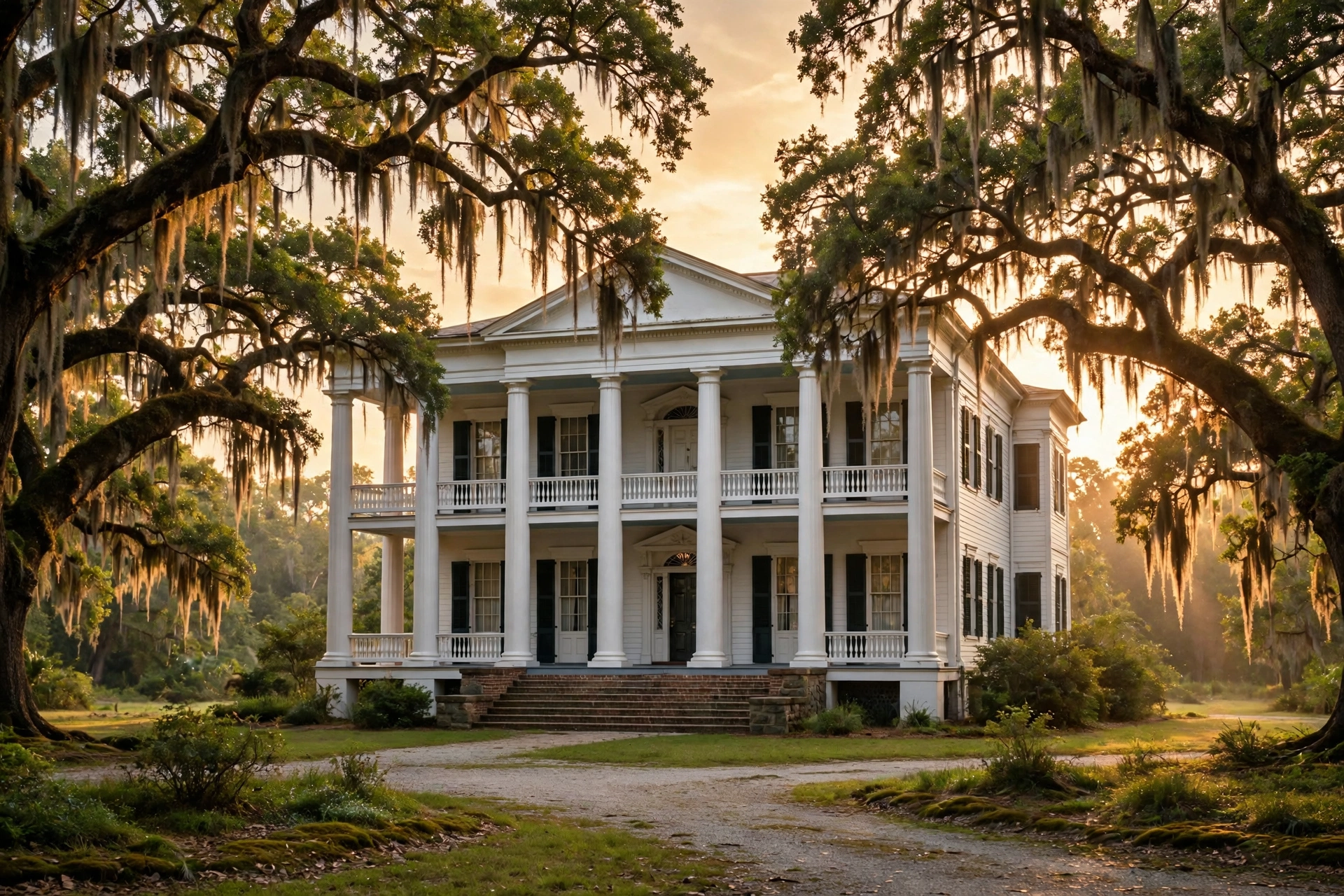
You have seen the photos: a grand white mansion with towering columns, oak trees draped in Spanish moss, and a wide porch made for slow summer evenings. Descriptions call homes like these "antebellum," movies set in the old South use the word constantly, and there is even a well-known horror film titled Antebellum. But what does antebellum actually mean?
The antebellum meaning is simpler than the romantic images suggest, and also heavier. It is a word about a period of American history that was beautiful in architecture and brutal in reality. This guide explains the definition, the Latin origin, and the history behind the word, so you understand both what it describes and why it is debated today.
Antebellum Meaning at a Glance
- Definition: an adjective meaning "existing or happening before a war," especially before the American Civil War.
- Latin origin: from ante (before) and bellum (war).
- Pronunciation: an-tee-BELL-um.
- Most common use: describing the American South in the decades before the Civil War began in 1861.
- Typical contexts: antebellum homes, antebellum architecture, antebellum South, antebellum era.
Where Does the Word “Antebellum” Come From?
Antebellum is a Latin phrase compressed into a single English adjective. Ante means "before," and bellum means "war," the same root that gives English words like "belligerent." Put together, antebellum simply means "before the war."
Strictly speaking, the word could describe the period before any war. In practice, English speakers, especially Americans, use it almost exclusively for one specific time: the era of the Southern United States before the Civil War. When an American says "antebellum," listeners automatically picture the pre-1861 South, its plantation houses, its cotton fields, and its society built on slavery.
What Was the Antebellum South?
The antebellum era generally covers the decades from the late 1700s, after the American Revolution, up to 1861, when the Civil War began. Historians often focus on the years from about 1830 to 1860, when the Southern plantation economy reached its height.
During this period, the South's economy ran on agriculture, above all cotton. The invention of the cotton gin in 1793 made cotton enormously profitable, and "King Cotton" came to dominate Southern life and American exports. Wealthy plantation owners built grand estates, educated their children in refinement, and developed a culture that prized honor, hospitality, and family lineage.
That wealth, however, was built on the labor of enslaved African Americans, who by 1860 numbered nearly four million people in the South. Any honest account of the antebellum period has to hold both facts at once: the elegance of the plantation houses and the suffering of the people forced to build and maintain them. The tension between those two truths is exactly why the word carries so much weight today.
Antebellum Architecture: Why the Houses Are Famous
When most people use the word today, they are talking about architecture. Antebellum homes are among the most recognizable buildings in America. Their signature features include:
- Tall white columns across the front, usually in the Greek Revival style.
- Symmetrical design, with a centered front door and balanced windows.
- Large porches and verandas on one or two levels, built for shade in the Southern heat.
- Grand staircases and high ceilings inside, designed to impress guests and catch breezes.
- Wide lawns and oak avenues, often lined with trees draped in Spanish moss.
Famous surviving examples, such as Oak Alley Plantation in Louisiana, draw visitors from around the world. Many of these sites now work to tell the full story of the estates, including the lives of the enslaved people who lived and worked there.
Why Is the Word “Antebellum” Debated Today?
In recent years, the word has become part of a public conversation about memory and language. Critics argue that "antebellum" is often used nostalgically, calling up images of hoop skirts and mint juleps while quietly skipping the slavery at the center of that world. Supporters of the term reply that it is a standard historical label, found in every textbook, and that using an accurate period name is not the same as glorifying it.
The debate became widely visible in 2020, when the country band Lady Antebellum changed its name to Lady A, saying the members had not fully considered the word's associations with the slavery era. Whether one agrees with such changes or not, the episode showed how a single vocabulary word can carry three centuries of history inside it.
Antebellum in Popular Culture
The antebellum world has been fictionalized more than almost any other American setting. Gone with the Wind, both the 1936 novel and the 1939 film, shaped the popular image of the era for generations, presenting it through a romantic lens that historians continue to question. More recently, the 2020 thriller Antebellum used the period as the setting for a story about racism and memory, showing how the word and the era still haunt American culture.
Examples of “Antebellum” in Sentences
- "The couple restored an antebellum mansion outside Charleston, complete with its original columns."
- "In the antebellum South, cotton exports made plantation owners some of the richest men in America."
- "Her history seminar focused on the lives of enslaved families during the antebellum period."
- "Tourists visit the city for its antebellum architecture and its Civil War landmarks."
Frequently Asked Questions About “Antebellum”
What years were the antebellum period?
The antebellum period is usually dated from the late 1700s or early 1800s until 1861, the year the American Civil War began. Many historians concentrate on 1830 to 1860, the height of the plantation economy.
How do you pronounce antebellum?
Antebellum is pronounced an-tee-BELL-um, with the stress on the third syllable, "bell."
Does antebellum always refer to the Civil War?
Technically, no. The word means "before the war" and can describe the period before any war. In American English, however, it almost always refers to the South before the Civil War, unless the context clearly points to another conflict.
What is the difference between antebellum and prewar?
They mean nearly the same thing, since "prewar" is the plain English equivalent. "Antebellum" is the more formal, Latin-based term, and it carries the specific historical flavor of the American South that "prewar" does not.
Final Thoughts on the Antebellum Meaning
The antebellum meaning can be captured in two words, "before war," but the phrase opens onto one of the most complicated chapters in American history. Behind it stand columned mansions and cotton wealth, and also millions of enslaved people whose labor made that world possible.
Understanding the word properly means holding the whole picture at once. That is what makes "antebellum" more than a vocabulary term. It is a reminder that history is rarely as simple as its prettiest buildings.