

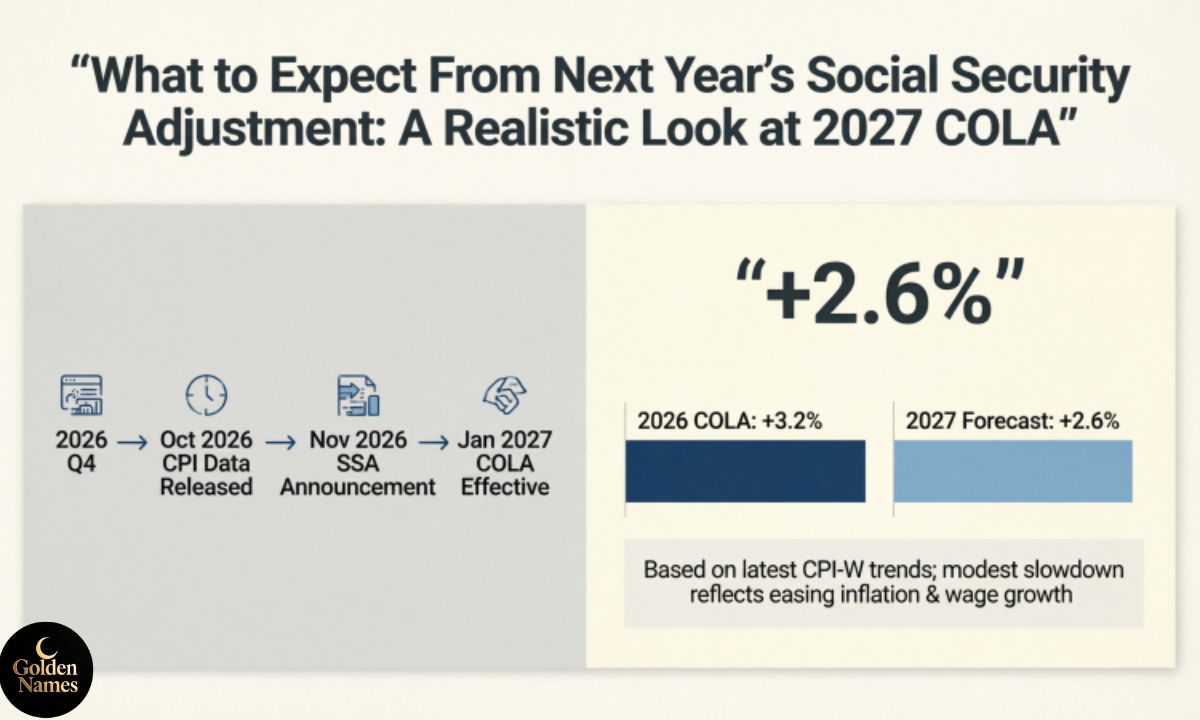
The news that Social Security benefits might jump by 3.6 to 3.8 percent in 2027 sounds pretty good on the surface. For the average retiree, that could mean an extra $75 to $80 per month. But here’s what nobody seems to talk about until it’s too late: that raise might not stretch as far as it sounds. If you’re counting on next year’s cost-of-living adjustment to keep you comfortable in retirement, you need the full picture before you start celebrating.
Let me walk you through what’s actually happening with Social Security payments in 2027, why the numbers matter differently than they used to, and what you should actually be doing right now to prepare.
Understanding How Social Security Adjustments Really Work
The annual cost-of-living adjustment, commonly called COLA, is basically Social Security’s way of trying to keep up with inflation. Every January, your benefits either stay the same or go up depending on how prices changed over the past year. Sounds straightforward, but the mechanics behind it tell a more interesting story.
The calculation uses something called the Consumer Price Index for Urban Wage Earners and Clerical Workers, the CPI-W for short. This index tracks what average urban workers pay for groceries, rent, utilities, and hundreds of other necessities. From July through September each year, the Social Security Administration watches how this index changes compared to the same three months the year before. That’s your COLA number.
Here’s the catch: this index might not match what you actually spend money on. If you’re retired and spend a huge chunk of your income on healthcare and prescription drugs, the CPI-W might not weight those expenses the same way your real budget does. That’s one reason why many retirees feel like their benefits never quite catch up.
The official announcement for next year’s adjustment happens October 14, 2026. That’s when we’ll know the exact percentage, not just the estimates floating around right now. But financial analysts at AARP and the Senior Citizens League are already making educated guesses based on the inflation data we have so far.
The Current 2027 COLA Forecast: What Experts Are Predicting
Based on inflation data through mid-year 2026, most forecasts are pointing toward a Social Security increase somewhere between 3.6 and 3.8 percent. The Senior Citizens League, which has been tracking this stuff for decades, is calling it at 3.8 percent. AARP’s initial analysis suggested 3.6 percent. These aren’t wild guesses, they’re based on actual price data and projections from the Federal Reserve about how the rest of the year might shake out.
To put that in dollars and cents: if you currently receive the average Social Security retirement benefit of roughly $2,100 per month, a 3.8 percent increase would add about $80 to your check. Someone getting $1,500 monthly would see an additional $57. If you’re one of the higher earners in the Social Security system pulling in $3,500, you’re looking at an extra $133.
Now, that’s not nothing. But before you start planning a vacation or stocking up on anything, consider this. The average retiree has seen their expenses rise by more than the COLA increase almost every year since 2010. The Senior Citizens League calculated that between 2010 and 2024, Social Security benefits actually lost about 20 percent of their purchasing power. That’s like having your money silently shrink in your bank account.
Why 3.8 Percent Sounds Better Than It Feels
This is where reality crashes into expectations for a lot of people. A 3.8 percent raise sounds reasonable, especially compared to what workers typically get in regular jobs. But there’s a fundamental problem with how we think about Social Security adjustments.
The COLA is designed to match general inflation. It’s not designed to catch up if you’ve been falling behind. Think of it this way: if you were a dollar short on groceries every single month for the past several years, an adjustment that matches this year’s grocery inflation doesn’t fix those years you came up short. It just stops you from falling further behind, maybe.
Here’s what’s really happening. Many seniors live on fixed incomes where Social Security is their primary source of money. They don’t get employer raises, bonuses, or annual increases like working people do. So when overall inflation is running at, say, 5 or 6 percent, but Social Security only goes up 3.8 percent, they’re losing ground in real terms.
Plus, if you’re on Medicare, part of that COLA boost gets eaten up before it even hits your bank account. Medicare Part B premiums, the insurance piece that covers doctor visits and outpatient services, have been climbing faster than benefits in recent years. The Centers for Medicare & Medicaid Services will announce 2027 Part B premiums later in the year, but many people expect them to edge up slightly. That means some of your COLA gets redirected straight to healthcare insurance instead of groceries, utilities, or anything else.
Breaking Down Where Inflation Really Hurts Retirees
Here’s something most financial articles gloss over: inflation doesn’t impact everyone equally. The CPI-W tracks a basket of goods and services, but the weight of each item in that basket doesn’t match a retiree’s actual spending.
Think about healthcare. Older adults spend roughly three times more on medical care than average American households. Prescription drug costs, doctor visits, hospital care—these add up fast. Meanwhile, retirees spend less on clothing, new vehicles, and dining out than the average household. So when the CPI-W shows inflation cooling in areas like apparel and vehicles but heating up in healthcare, the official number might look optimistic while retirees feel squeezed.
Housing costs are another area where retirees often feel more pain. If you own your home free and clear, rising property taxes hurt your fixed budget disproportionately. If you’re renting, housing costs have exploded in many markets, and Social Security adjustments haven’t kept pace with that surge. Food prices matter tremendously to someone budgeting carefully, and grocery inflation has been stubborn despite cooling overall inflation.
The reality is that the 3.8 percent COLA might be perfectly accurate for tracking overall inflation, but it won’t necessarily keep your actual standard of living steady. You might need to cut back somewhere, pull more from savings, or ask family for help, even with a raise coming.
What This Means for Your 2027 Finances: Practical Numbers
Let’s talk specifics about what this adjustment means for actual retirement budgets. You’ll receive the official details about your personal benefit increase starting in December 2026. The Social Security Administration sends out personalized notices that show your exact new benefit amount and any Medicare deductions.
If you’re currently receiving $2,000 per month and get a 3.8 percent increase, your new benefit before any deductions would be $2,076. That’s $76 more monthly, or $912 extra per year. Sounds useful, but how much does it actually improve your life?
Here’s a real scenario: Say you budget $200 monthly for groceries, $150 for utilities, $300 for healthcare costs, $400 for rent or property expenses, and the rest for other necessities. A $76 increase doesn’t leave much margin for error if grocery prices jump another 4 percent or your heating bill spikes in a cold winter. You’re probably going to need to cut something else or dip into savings anyway.
This is why financial advisors keep saying that Social Security should never be your only income source. Even with the COLA, benefits are designed as a foundation, not a complete retirement income. Many retirees end up supporting themselves through a combination of Social Security, pensions (if they’re lucky), investment withdrawals, and sometimes part-time work.
The Medicare Factor: Why Your Raise Might Feel Smaller
If you haven’t yet encountered how Medicare works in retirement, here’s the heads-up: Medicare premiums come straight out of your Social Security check in most cases, and you don’t get much choice about it.
For 2026, Medicare Part B premiums are $174.70 per month for most people. These premiums increase annually, and while they’re often raised based on Social Security’s COLA, the formula isn’t one-to-one. In some years, your COLA increase has been entirely consumed by Medicare premium increases. It’s called the “hold harmless” rule, but it still means your take-home benefit doesn’t grow.
For 2027, we won’t know the exact Part B premium until later in the year. But if it increases by $5 to $10 per month, which many observers think is likely, then your actual benefit increase in your bank account could be $65 to $71 instead of $76. That matters when you’re stretching every dollar.
People who are covered by employer retiree health insurance, Medicaid, or who aren’t on Medicare yet have more of their COLA come straight to them. But the vast majority of Social Security recipients lose some of the increase to healthcare costs.
When Will You Actually See This Money? Important Dates to Know
The official COLA announcement comes October 14, 2026. After that happens, here’s the timeline:
In December 2026, Social Security sends personalized COLA notices to everyone receiving benefits. These notices show your old benefit amount, the COLA percentage, your new benefit amount, any deductions (like Medicare), and the effective date.
Your first check with the increase arrives in January 2027. For most people getting direct deposit, that means the new amount hits your bank account by January 3rd. If you still receive paper checks, allow time for mailing.
The benefit amount holds steady for the whole year unless something major changes, like a return to work or changes in living situation. Your next adjustment opportunity is January 2028, when we go through this whole process again.
It’s worth marking this on your calendar because sometimes people’s circumstances change and they need to adjust their budget accordingly. If you were barely getting by before, that $75 to $80 monthly increase might be just enough to relieve some pressure. If you were already struggling significantly, one COLA adjustment probably won’t solve the underlying problem.
Pros and Cons of the Current 2027 COLA Forecast
Pros: The 3.8 percent increase is above the historical average of about 3.1 percent since COLAs started. You’ll see an actual increase, unlike some years when COLA was barely 1 percent. This is higher than what many retirees received in 2025 (2.5 percent) and 2026 (2.8 percent), so it represents improvement. For people on very tight budgets, even an extra $76 monthly can mean the difference between making it work and falling short.
Cons: The increase still lags behind many retirees’ actual expenses, particularly in healthcare and housing. Your increase will be partially offset by Medicare premium increases. If the economy shifts and inflation picks up in the final months of 2026, inflation during 2027 might still outpace the COLA you received. The timing,knowing in October, receiving the full increase only in January, can create awkward budget gaps.
Why Some Retirees Feel Let Down Despite Getting a Raise
This is counterintuitive to people who don’t live on fixed incomes, but it’s real: a 3.8 percent raise can actually feel like a cut if your real expenses rose faster than that over the past year.
Imagine you spent an extra $300 this year on medical care, groceries, and utilities compared to last year. Your Social Security benefits are going up by about $80 per month, or $960 annually. That new money addresses about a third of your increased expenses. You’re still short $240 for the year, even though you’re getting a raise.
Over the past decade, this has been the consistent experience for many retirees. The Senior Citizens League’s research showed that between 2010 and 2024, while Social Security benefits increased by 35 percent total, seniors’ healthcare costs nearly doubled and food costs rose 50 percent. A 3.8 percent annual COLA can’t possibly keep up with that gap.
So when you see headlines celebrating a strong COLA, remember that “strong” is relative. It’s strong compared to some other years. But it’s usually not strong enough to actually restore the purchasing power seniors have lost.
Common Mistakes People Make With COLA Planning
The biggest mistake is treating your COLA increase as new money available for discretionary spending. Some people mentally pencil in that $76 or $80 monthly as a bonus for something extra—a subscription service, dining out more often, or a small luxury. In reality, you need most or all of that increase just to stay in place financially.
Another mistake is assuming Medicare premiums will stay stable. They won’t. And assuming they’ll increase by less than your COLA is wishful thinking. Many people get surprised when their actual benefit increase is much smaller than the announced COLA because they forgot about Medicare withholding.
Forgetting to adjust your household budget is a surprisingly common mistake too. You might think you’ll adapt as the checks come in, but it’s smarter to plan in advance. Figure out where that extra money is needed most, is it groceries, utilities, medical costs, or savings? Having a plan beats making reactive decisions later.
People also sometimes forget to update beneficiary designations or make other important changes to their account if circumstances shift before January 2027. While COLA happens automatically, other aspects of your Social Security account need active management.
Looking Ahead: What Happens if Inflation Shifts Before October?
The current 3.8 percent forecast assumes inflation stays at current levels through the summer and fall of 2026. But inflation isn’t static. Several things could push it up or down between now and October.
If energy prices jump unexpectedly, that could push inflation higher, resulting in a bigger COLA. Conversely, if the Fed’s recent rate increases finally cool the economy more than expected, inflation could moderate further and bring COLA down slightly. Trade policy, supply chain disruptions, and weather events affecting food prices can all shift inflation between now and the official announcement.
This is why Social Security keeps adjusting its estimates throughout the year. Every time new inflation data comes out, forecasters recalculate. The October announcement will use actual data through September, not projections.
For your planning purposes, it’s reasonable to assume something in the 3.5 to 4 percent range based on current trends. Don’t plan expecting 4.5 or 5 percent unless something dramatically changes. But also don’t panic if the final number is 3.2 percent instead of 3.8. The variance is usually within a percentage point or so.
What You Should Actually Do Right Now
Stop waiting for October’s announcement to get your finances in order. You don’t need to know the exact number to make good decisions now.
First, review your current budget in detail. How much do you actually spend each month on groceries, utilities, healthcare, housing, and everything else, Write it down. Not a rough estimate, actual numbers from your bank and credit card statements.
Second, identify where you’re most vulnerable. Which expenses have been rising fastest? Are you falling behind on any regular payments? Would an extra $80 monthly actually solve any problems, or would you need more than that?
Third, look at your overall retirement income picture. Social Security isn’t your only possible resource. Are you leaving money on the table by not claiming it optimally, Do you have pensions, annuities, or other income sources? Are you invested adequately to generate more retirement income if needed? Have you considered part-time work?
Fourth, get your Medicare details locked in. Understand what you’re currently paying and what you’ll likely pay in 2027. Don’t assume you know, actually check. Medicare has different plan options, and some might save you significant money compared to what you’re currently paying.
Finally, talk to a financial advisor if you haven’t already. The conversations don’t need to cost much or take forever. A decent advisor can help you stress-test your retirement budget against different scenarios, including a COLA that’s higher or lower than currently forecasted.
Common Questions About 2027 Social Security Adjustments
Does everyone get the same COLA percentage
Yes. Every Social Security beneficiary receives the same percentage increase. The COLA doesn’t vary based on how much you’re getting or your income level. That 3.8 percent applies equally whether you’re receiving $500 or $5,000 monthly. However, the dollar amount you receive increases differently because it’s a percentage of your individual benefit.
What if I’m still working? Does the COLA still apply
If you’re receiving Social Security benefits and working, you still get the COLA increase. However, if you haven’t yet reached full retirement age and you earn above the annual limit, your benefits might be reduced. For 2026, that limit is $24,480. If you earn more, Social Security withholds $1 for every $2 over the limit. The COLA itself still applies, but your benefits might be reduced due to earnings.
Can the COLA ever be zero? Could benefits go down
Benefits never decrease. If inflation were somehow negative (deflation), Social Security would just announce 0 percent COLA and everyone’s benefits would stay the same. It’s never happened since COLAs started in 1975, but theoretically it’s possible.
How does COLA affect divorced ex-spouses
If you receive Social Security benefits based on an ex-spouse’s earnings, you get the same COLA as everyone else. So if you receive benefits as an ex-spouse, your 2027 increase would also be around 3.8 percent.
Will the estimate of 3.8 percent definitely happen
No. The October announcement could be higher or lower depending on July, August, and September inflation data. Inflation could cool more than experts expect, pushing COLA down. Or it could remain stubborn, pushing COLA higher. The current estimate is the best guess based on data through mid-year, but it’s not locked in until October.
The Bottom Line on Next Year’s Social Security Adjustment
The 2027 Social Security COLA is shaping up to be around 3.8 percent, which is above average and certainly better than a 2 percent or 1 percent increase. For the average retiree, that means about $75 to $80 more monthly starting in January 2027. That’s real money, and in the context of fixed incomes, it matters.But here’s what matters more: how that increase fits into your actual financial situation. Will it adequately address your rising costs, or will you still fall behind? Can you adjust your spending to live within the new budget, or do you need to find additional income sources?
The COLA is one piece of your retirement picture. It’s important, but it’s not the whole story. A comprehensive approach to retirement finances, one that considers Social Security timing, Medicare costs, other income sources, spending patterns, and unexpected expenses, is what actually determines whether your retirement is secure or stressed.
Focus less on celebrating the COLA percentage and more on using it as an opportunity to reassess your overall retirement plan. October’s announcement will give you the exact number, but your financial health depends on what you do with that information between now and January.The good news is that you still have several months to prepare and adjust. That’s valuable time. Use it wisely.