

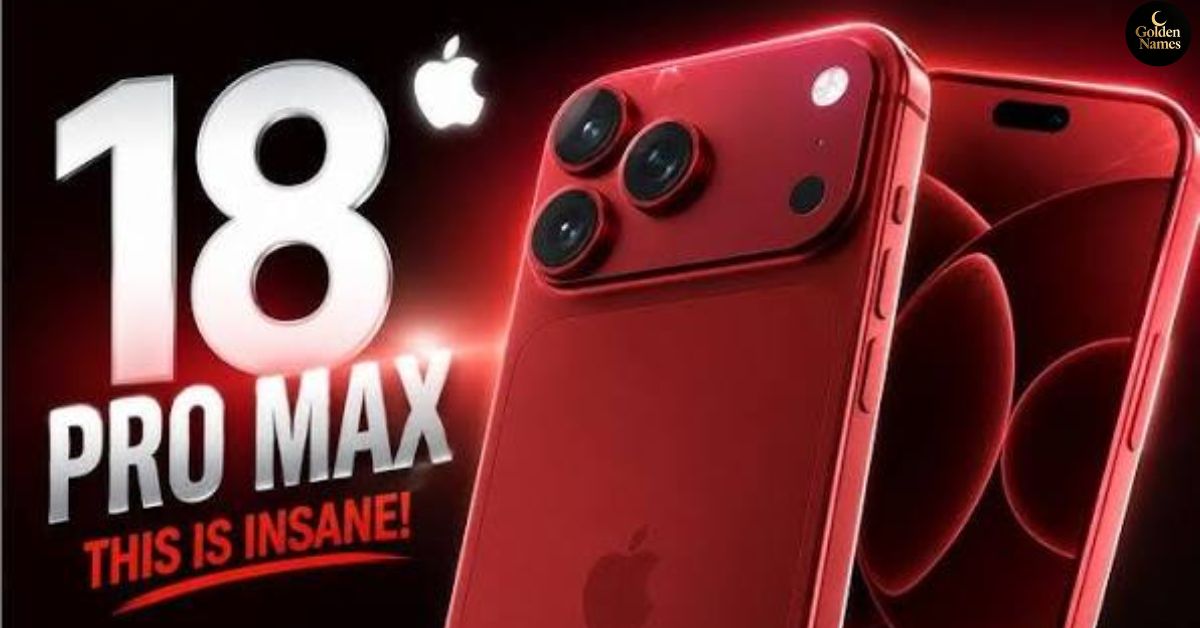
When rumors started circulating about Apple’s next generation of premium smartphones, one device kept dominating the conversation: the iPhone 18 Pro Max. We’re still waiting for the official announcement, but based on leaked specifications and industry insights, this is shaping up to be one of the most significant upgrades in Apple’s lineup.
Let me break down what we know so far and what this could mean for anyone considering a premium iPhone experience.
What Exactly Is the iPhone 18 Pro Max?
The iPhone 18 Pro Max represents Apple’s flagship offering in what would be the eighteenth generation of iPhones. It’s the larger model in the Pro lineup, designed for users who want maximum screen real estate combined with the most advanced camera system and processing power Apple has to offer.
Think of it as the ultimate iPhone for power users, content creators, and anyone who treats their smartphone like a primary computing device. The Pro designation means you’re getting professional-grade cameras, advanced computational features, and top-tier performance that goes beyond what regular iPhone models provide.
The Display That Dominates Your View
One of the first things you’ll notice about the iPhone 18 Pro Max is its absolutely massive 6.9-inch screen. For context, that’s literally larger than some tablets from a decade ago. This LTPO Super Retina XDR OLED display isn’t just big, it’s incredibly sharp.
The 1320 x 2868 pixel resolution delivers roughly 460 pixels per inch, which means even at close viewing distances, everything looks crisp and detailed. Photos appear almost life-like, text renders smoothly, and games look stunning. The 19.5:9 aspect ratio is taller than most competing phones, giving you more vertical space for content without making the device feel unnecessarily wide.
What makes this display special is the Ceramic Shield 2 protection. Apple’s been refining this technology for a few generations now, and this version should offer even better scratch resistance and durability than before. You’ll have an anti-reflective coating too, which actually means less glare outdoors and better viewing angles overall.
The LTPO technology allows the refresh rate to adapt intelligently between different speeds, saving battery when you don’t need 120Hz smoothness. This is genuinely useful technology, not just a spec number that looks good in marketing materials.
Performance That Handles Everything You Throw at It
Under the hood sits the Apple A20 Pro chipset, built on a cutting-edge 2-nanometer process. This isn’t just a minor speed bump from the previous generation. We’re talking about genuine generational performance leaps that make things like video editing, 3D gaming, and complex app tasks feel effortless.
The processor comes with 12GB of RAM, which is finally a meaningful amount for iOS. More RAM helps with multitasking, keeping apps loaded in memory, and handling resource-intensive applications without stuttering or crashes.
Here’s what this performance level means in real life: you can edit 4K video directly on your phone without waiting for rendering. You can run multiple apps simultaneously without anything slowing down. Games that would have seemed impossible on phones five years ago run smoothly without dropping frames.
The 8-core GPU handles graphics-intensive work, so whether you’re playing competitive gaming titles or working with augmented reality applications, everything feels responsive and smooth.
The Camera System That Rivals Professional Equipment
Let’s be honest, for many people, the camera is the main reason to choose a flagship iPhone, and the iPhone 18 Pro Max doesn’t disappoint.
The main camera sensor is 48 megapixels with an impressive f/1.6 aperture. That wide aperture means it captures more light, which translates to better low-light performance and that beautiful background blur (bokeh) that makes portraits look professional. The 24mm focal length is what’s considered standard, so you get a natural perspective similar to how your eye sees the world.
What really matters here isn’t just megapixel count, it’s the sensor size. At 1/1.28 inches with 1.22-micrometer pixels, this sensor gathers a lot of light per pixel. Dual pixel phase detection autofocus means faster, more accurate focusing, even on moving subjects. The sensor-shift OIS (optical image stabilization) keeps handheld shots sharp even when your hands aren’t steady.
Then there’s the 100mm periscope telephoto lens. This is the real professional tool. With 4x optical zoom, you can frame distant subjects without losing detail or image quality. The f/2.8 aperture and smaller sensor are optimized for telephoto work, which is how telephoto lenses typically function. The 3D sensor-shift OIS here is particularly sophisticated, tracking motion in more dimensions than standard stabilization.
The 120-degree ultrawide lens with a 13mm focal length gives you an expansive field of view for landscape photography or shooting in tight spaces. This 48MP ultrawide sensor means even heavily cropped ultrawide shots retain excellent detail.
There’s also a TOF 3D LiDAR scanner, which sounds like fancy terminology but basically means the phone can understand depth information about scenes better, improving augmented reality apps and enhancing autofocus in tricky lighting situations.
Video Capabilities That Matter
The video capabilities push into territory that would have required expensive equipment just a few years ago. You can record 4K video at up to 120 frames per second with 10-bit HDR and Dolby Vision support. ProRes and ProRes RAW capture means filmmakers can grade footage with more flexibility and color information.
Apple Log 2 is a new color science option that captures video in a flatter profile, preserving highlight and shadow detail for maximum flexibility in post-production. If you’re serious about video creation, this is significant.
The 3D video mode, Apple’s spatial video recording, captures depth information alongside video, allowing for later viewing on Vision Pro devices or future spatial displays. It’s forward-thinking technology that might seem niche now but could become more important as spatial computing becomes mainstream.
Battery Life and Charging
The battery situation depends on your region. The eSIM-only model gets a 5567 mAh battery, while the Nano-SIM model has 5391 mAh. This is genuinely large capacity for such a thin device (9mm thickness, 240 grams weight).
The charging setup offers 50% battery in 20 minutes with wired charging via USB-C using Power Delivery 3.2 technology. The 25W wireless MagSafe charging gets you to 50% in 30 minutes, which is pretty convenient if you’re charging overnight. There’s even 4.5W reverse wireless charging, meaning you can use your iPhone to wirelessly charge an Apple Watch or other compatible devices.
Chinese models support 15W wireless charging instead, which is a regional difference worth noting if you’re traveling or importing.
Software and Ecosystem Integration
The iPhone 18 Pro Max ships with iOS 27, Apple’s latest operating system designed specifically to take advantage of this hardware. This means you get access to features and performance optimizations that older iPhones simply can’t run.
The integration with the Apple ecosystem is seamless. If you own an Apple Watch, AirPods, iPad, and Mac, everything synchronizes effortlessly. Handoff lets you start something on your iPhone and continue on another device. Universal Clipboard shares copied content across devices instantly.
Storage Options for Every Need
You get 256GB, 512GB, 1TB, or 2TB storage options, all with 12GB RAM. The lack of microSD card slot is consistent with Apple’s strategy, so you need to choose storage capacity carefully at purchase time.
For casual users, 256GB typically handles thousands of photos, music, apps, and documents comfortably. Power users and those who shoot lots of video might prefer 512GB or higher. The 2TB option is genuinely impressive and overkill for most people, but professionals creating tons of local files benefit from it.
Design and Durability
The device features a glass front with Ceramic Shield 2, an aluminum frame, and an aluminum or glass back. The matte glass back (presumably the aluminum version) is more fingerprint-resistant than glossy surfaces, which is a practical win.
IP68 rating means dustproof and water-resistant up to 6 meters for 30 minutes. You can accidentally drop it in a pool, and it should survive just fine. This isn’t something you want to test repeatedly, but it’s nice to have that protection.
The color options include Coffee Brown, Purple, and Burgundy, a departure from typical flagship colors, suggesting Apple is getting creative with the aesthetic.
Connectivity and Communication Features
The phone supports 5G in both standalone (SA) and non-standalone (NSA) modes, with sub-6GHz bands internationally and mmWave support in the USA. This means the fastest possible 5G speeds where available.
Wi-Fi 7 support positions this phone for future-proofing, as more routers and networks gradually adopt this standard.
Dual SIM with Nano-SIM plus eSIM (internationally) or dual eSIM configurations give flexibility for managing multiple phone numbers, whether that’s separating work and personal lines or having local numbers when traveling.
Emergency SOS and Messages via satellite features inherited from recent Pro models mean you can reach help even without cellular coverage in truly remote locations.
Should You Consider the iPhone 18 Pro Max?
This phone makes sense if you:
- Need the largest display possible for content consumption or productivity
- Shoot lots of photos or video and want professional-grade tools
- Run demanding applications like video editing or 3D design software
- Want the absolute latest technology and don’t mind premium pricing
- Use other Apple devices and want tight ecosystem integration
It might be overkill if you:
- Just need a reliable phone for calls, texts, and casual social media
- Have a limited budget or upgrade your phone frequently anyway
- Don’t utilize advanced camera features or processing power
Common Questions About the iPhone 18 Pro Max
Will this phone really need 2TB of storage? Most people don’t. Even heavy video shooters find 512GB sufficient if they offload files regularly. The 2TB option exists for a niche audience and probably represents a tiny percentage of sales.
Is the weight (240 grams) noticeable? Yes, compared to lighter phones, this has presence. It feels substantial and premium, but some people find it fatiguing during long periods of one-handed use. It’s heavier than the standard iPhone models but not unusable.
Can you actually use 4x optical zoom effectively? The periscope telephoto works well for distant subjects, landscape details, and photography situations where you can’t physically get closer. For video, it’s less useful because stabilization challenges increase at longer focal lengths.
Is the ultrawide lens actually useful? Absolutely. Architecture photography, group shots, or real estate content becomes easier with the ultra-wide perspective. Just remember that ultrawide lenses distort edges, so positioning matters.
How long will this phone actually last? Apple typically supports iPhones with software updates for around 5-6 years. Battery degrades gradually, with most phones seeing noticeable slowdown after 3-4 years of heavy use. The repairability is mixed, screen replacement costs money, but parts are available through Apple and third parties.
The Bigger Picture: Where Flagship Phones Are Heading
The iPhone 18 Pro Max represents a maturation in smartphone technology. We’re past the era of revolutionary changes each year. Instead, we’re seeing incremental improvements that add up over time.
The AI integration that’s coming to iOS is more significant than the raw hardware specs. Apple’s on-device processing power enables features like smarter suggestions, enhanced photo editing, and context-aware assistance that actually respects your privacy.
The 6.9-inch display size reflects a broader trend—people want larger phones for everything from entertainment to work. The “phablet” category that seemed awkward a decade ago is now just the standard expectation.
The camera system’s continued evolution matters because smartphone cameras have become primary for most people’s photography and videography. The gap between “good enough” and “excellent” has narrowed on many phones, but the iPhone 18 Pro Max is pushing boundaries in areas like spatial video and computational photography.
Frequently Asked Questions
When will the iPhone 18 Pro Max actually be released
Apple hasn’t announced it yet. Based on historical patterns, expect announcement in September 2026 with availability shortly after. This article is based on leaked specifications and rumors.
How much will it cost
Apple hasn’t announced pricing. The previous-generation Pro Max models started at premium price points, likely $1,000+. The 2TB storage option would add extra cost.
Is it worth upgrading from the iPhone 17 Pro Max
If you use your phone for professional work or care about the latest camera features, possibly. For most people, a 1-2 year old flagship still handles everything fine.
Can I use this phone with my current charger
It uses USB-C, which is standard now. If you have a USB-C charger from recent devices, it should work, though you’ll get fastest charging with high-wattage chargers.
Does it support wireless charging mats
Yes, Qi2 standard wireless charging works. The MagSafe connection ensures proper alignment automatically.
Is 9mm thickness a problem for durability
Not really. Modern glass and Ceramic Shield technology are quite durable. The concern is more about bend resistance with thinner frames, but Apple’s engineering is solid.
Should I wait for this or buy now
If you need a phone now, don’t wait. If you can hold on until the official announcement (likely September), you’ll have complete information for making a decision. The current generation is still excellent.
What’s the battery life like in real use
Estimates suggest 18-24 hours of typical usage with mixed screen time, apps, and connectivity. Heavy use drops this significantly; light use extends it. Actual battery life depends on your specific usage patterns.
Is there a standard iPhone 18 Pro (non-Max)
Based on Apple’s pattern, yes, but this article focuses on the Pro Max specifically. The standard Pro model typically has a smaller display (around 6.1 inches) and sometimes slightly different specs.
Can’t I just use my iPhone 15/16 for another year
Absolutely. Older iPhones still get software updates and handle everyday tasks perfectly fine. The iPhone 18 Pro Max is for people who specifically want the latest technology, not for those using older phones that still work.
Final Thoughts
The iPhone 18 Pro Max sits at a specific point in the market: it’s for people who want the absolute best that Apple makes and are willing to pay premium prices for that distinction.
It’s not a necessity for everyone. A standard iPhone model handles 95% of what users actually do daily. But for that 5% doing professional work, capturing critical content, or simply wanting the most advanced technology available, it’s a compelling choice.
The real test will be the price when it’s officially announced. Apple’s flagship pricing has crept upward over the years, and if the iPhone 18 Pro Max maintains the trend, it’ll push well into territory that makes you really think about the investment.
Until the official launch, take these leaked specs with healthy skepticism. Manufacturers sometimes change specifications before release, features get added or removed, and initial pricing sometimes shifts. The general direction, larger display, more capable camera, faster processor, seems solid based on industry trends and Apple’s historical pattern of evolution.
If you’re interested in following the announcements, Apple typically reveals new iPhones in September, with pre-orders starting immediately and general availability within two weeks.
Whether the iPhone 18 Pro Max becomes your next phone or you opt for something different, the options available today are genuinely impressive compared to just a few years ago. The flagship smartphone market is more competitive than ever, which ultimately benefits consumers through better features and more choices.
Key Takeaways
The iPhone 18 Pro Max represents the cutting edge of what Apple can achieve in a smartphone. It combines a massive display, professional camera capabilities, incredible processing power, and advanced features into one premium package.It’s not for everyone,and it doesn’t need to be. Apple makes iPhones across various price points and capability levels. The Pro Max is specifically for those who want maximum everything and are willing to pay accordingly.
The specs are impressive on paper, but what matters most is how you’ll actually use the phone. A 48MP camera doesn’t matter if you only take casual snapshots. A 2TB storage option is meaningless if you don’t generate massive content files. The 120Hz display is nice but not essential for most tasks.
Think carefully about what you actually need from your next phone. Then consider whether the iPhone 18 Pro Max justifies the premium versus other options available. For the right person, with the right needs, it’s absolutely worth the investment.The smartphone market moves fast, and what seems revolutionary today becomes standard tomorrow. But right now, based on leaked specifications, the iPhone 18 Pro Max is positioning itself as one of the most advanced phones Apple has ever built.