
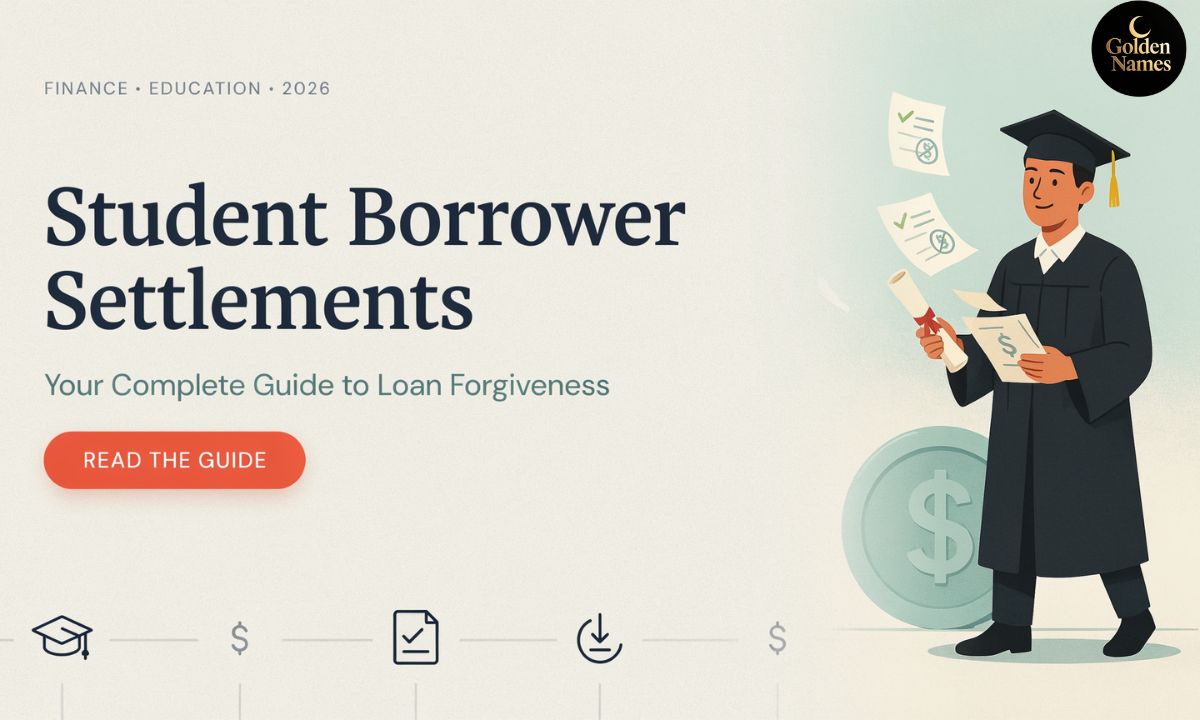
When you’re carrying the weight of student loan debt, hearing about a settlement that could wipe away thousands of dollars sounds almost too good to be true. Yet for hundreds of thousands of borrowers across the country, that’s exactly what’s happened. The question is: could you be one of them.
Student borrower settlements represent a critical lifeline for people who were misled by their schools. These legal agreements between borrowers and the federal government exist for one reason: to hold colleges accountable when they’ve essentially defrauded their students. Understanding how they work, who qualifies, and what happens next can literally change your financial life.
What Is a Student Borrower Settlement, Anyway?
A student borrower settlement is a legal agreement that allows the Education Department to cancel federal student loans for borrowers who claim their school misrepresented key facts about their education. Think of it as a financial reset button for people who were promised one thing and got something entirely different.
The authority to grant these settlements comes from a federal regulation called “borrower defense. This rule has been around for years, but it took the weight of class-action lawsuits to actually make it work. Borrowers defense essentially says: if your school lied to you about job prospects, credit transferability, graduation rates, salary expectations, or program accreditation, you have the right to request forgiveness.
The difference between simply applying for borrower defense and participating in a settlement is significant. Individual borrower defense claims can take years to process. Settlements, on the other hand, allow groups of borrowers to receive relief all at once because a court has already determined they were wronged.
How Did We Get Here? The Long Legal Battle
The most significant settlement affecting borrowers today traces back to 2019, when advocates sued the Education Department over its handling of borrower defense claims. During the Trump administration’s first term, thousands of borrowers submitted claims, but the department, under then-Secretary Betsy DeVos, essentially stopped processing them. Worse, many claims were denied without the department actually reviewing whether the borrowers had legitimate grievances.
The lawsuit, originally called Sweet v. DeVos, has endured across three presidential administrations, changing names each time a new education secretary took office. By the Biden administration, it became Sweet v. Cardona. Now it’s Sweet v. McMahon, reflecting current Education Secretary Linda McMahon’s position in the Trump administration’s second term.
What makes this case different from countless other lawsuits is its sheer scope. Nearly half a million borrowers have been affected. The total debt forgiveness? Over $23 billion. That places it on track to become the largest settlement against the federal government in history.
Which Schools Are We Talking About?
The settlements primarily target for-profit colleges that engaged in aggressive, often misleading recruitment tactics. These institutions include major names in the for-profit sector like University of Phoenix, ITT Technical Institute, Corinthian Colleges, and others that promised job placement assistance, guaranteed employment, or degree credits that employers and other schools wouldn’t recognize.
What’s important to understand is that these weren’t small mistakes. Investigations revealed systematic deception. Schools sent recruiters into low-income neighborhoods with marketing blitzes promising quick degrees and immediate employment. Some recruiters falsely claimed that degrees would be accepted by specific employers or graduate programs. Others inflated job placement rates or earnings potential.
The settlement covers two main groups of borrowers: those who attended predetermined schools on the Education Department’s list, and those who filed individual borrower defense claims after the settlement was announced, claiming they attended other institutions that also defrauded them.
Who Actually Qualifies for a Settlement?
Understanding whether you qualify requires knowing a few key details about how these settlements work.
If you attended certain for-profit colleges, the process is usually automatic. The Education Department has published a list of schools whose attendees are eligible for full and automatic discharge. If you borrowed federal loans to attend one of these schools, you don’t need to do anything, the department has already identified you and will process your forgiveness. You might receive a notification in the mail or an alert in your loan servicer account.
If you attended other schools or feel your institution engaged in fraud, you can submit a borrower defense claim. This is where things get more complex. You’ll need to document specific false statements made by your school. For example, you might show that the school promised 95 percent job placement in your field but the actual rate was 40 percent. Or you might prove that credits you earned didn’t transfer to other colleges as promised.
The burden of proof isn’t as strict as it would be in criminal court, but you do need actual evidence. Emails, promotional materials, transcripts of conversations with admissions staff, and employment verification all matter.
What Actually Happens When Your Loan Gets Discharged?
Discharge isn’t just erasure from a financial perspective. When your federal student loan is discharged through a borrower defense settlement, several things happen:
Your loan balance is eliminated. This amount is forgiven completely. You won’t see a 1099-C tax form for forgiven student loans under these settlements, the government isn’t treating this as taxable income. This differs from other types of loan forgiveness, which sometimes trigger tax consequences.
If you already paid money toward loans that get discharged, you’re eligible for refunds. Some borrowers paid substantial amounts before learning about settlements or before their claims were processed. The Education Department has refunded hundreds of millions to borrowers in this situation.
Your credit report improves. Any negative marks related to these discharged loans may be removed or updated, though the specifics depend on your servicer and the stage of delinquency your account was in.
The Real Human Impact: Stories That Matter
Numbers like $23 billion and 450,000 borrowers can feel abstract until you put a face to them. Jessica Feindt, who attended University of Phoenix, exemplifies the typical borrower facing this situation.
Feindt was the first in her family to attend college. She enrolled with legitimate ambitions to earn a degree in psychology. The university marketed heavily in her Michigan community, billboards, radio spots, everywhere. It seemed like a viable path to a better life.
The university promised her that her degree would be accepted by Michigan graduate programs. It wasn’t. She completed her undergraduate degree in less than four years, taking on substantial federal loans to cover costs. Years later, waiting for relief, she watched interest accumulate while her career possibilities felt constrained by a degree that wasn’t recognized where she needed it to be.
When Feindt’s borrower defense claim finally processed and her loans were discharged, she described a complicated mix of emotions. Relief, obviously. But also anger about lost time and money, years of financial stress while raising a family, and opportunities deferred because of debt payments she never should have made.
Her story isn’t unique. Thousands of borrowers have similar experiences, people working jobs unrelated to their degrees, paying money toward education that didn’t deliver on its promises, watching years pass while their claims sat in bureaucratic limbo.
Why Did This Take So Long?
One legitimate question emerges: if these borrowers were clearly defrauded, why did it take years for the Education Department to process claims?
The answer involves legal complexity and deliberate obstruction. The original lawsuit challenged the department’s authority and methodology. Courts had to determine whether the department had properly reviewed claims, whether decisions were arbitrary, and how to ensure borrowers received due process.
During Trump’s second term, the Education Department argued it needed more time to properly review applications, requesting an 18-month extension beyond the court-ordered deadline. However, the U.S. Court of Appeals for the Ninth Circuit ruled in July 2026 that the department had years to process claims and couldn’t justify delay simply by asking for more time.
This legal back-and-forth, while frustrating for borrowers waiting years for relief, matters because it establishes precedent. Courts essentially said: you can’t ignore your legal obligations, and you can’t use bureaucratic procedures as an excuse for indefinite delay.
What About Individual Borrower Defense Claims (Not Just Settlements)?
While the settlement covers many borrowers, others can still file individual borrower defense claims if they believe they were defrauded by schools not on the settlement list.
The process requires submitting detailed information to the Education Department explaining how your school misled you. You’ll need specific examples, ideally with documentation. The department will review your claim and make a determination about whether the school’s actions violated regulations.
Individual claims generally take longer than settlement discharges, sometimes years, but they do represent a path to forgiveness even for borrowers whose schools weren’t included in major settlements.
The Bigger Picture: What This Means for Higher Education
Borrower defense settlements send a message to the higher education industry. Schools can’t simply market aggressively, collect tuition, and avoid accountability when their promises don’t materialize.
Some institutions have been hit multiple times. Corinthian Colleges, which operated numerous for-profit schools, faced so many borrower defense claims that it essentially became the template for these settlements. The sheer volume of valid claims against these schools forced the government to act.
This creates incentive structures. Schools that engage in deceptive practices now understand that their students can eventually obtain forgiveness, but only after years of legal battles. That’s not an ideal deterrent, but it’s something.
Common Misconceptions About Borrower Settlements
Myth: If I didn’t receive an automatic notice, I don’t qualify. This isn’t necessarily true. The Education Department may not have complete information about all students who attended certain schools. You can still file a claim if you believe you were defrauded. The automatic notices only cover a portion of eligible borrowers.
Myth: Loan forgiveness means I owe taxes on the forgiven amount.” For borrower defense discharges, this isn’t the case. Congress excluded these from being treated as taxable income, unlike some other forgiveness programs where the forgiven amount gets treated as wages.
Myth: I have to hire a lawyer to file a borrower defense claim. Lawyers are completely optional. You can file yourself, though having legal help might strengthen your case if it’s complex. Many legal aid organizations also provide free assistance.
Myth: “I’m too late to file.” Borrower defense claims don’t have strict statute-of-limitations deadlines the way other legal claims do. If you were defrauded, you can file even years after attending school.
How to Check Your Status and What to Do Next
If you’re wondering whether you might qualify for a settlement, here’s your action plan:
First, identify which school you attended. Go to the Education Department’s official borrower defense information page and check if your school appears on the automatic discharge list. This is free, official, and won’t trigger any negative consequences.
If your school isn’t listed, or you feel your situation warrants individual review, visit studentaid.gov. You’ll need your Federal Student Aid ID (or Social Security number) to access your account. Look for Borrower Defense options in your loan management dashboard.
If you decide to file a claim, gather documentation. Email correspondence with school staff, admissions materials, promotional content, employment offers that fell through—anything that demonstrates false statements. Write a clear narrative explaining what the school promised versus what actually happened.
Submit your claim through the official Education Department channels. Don’t use third-party websites that claim to facilitate the process. The department doesn’t charge fees for borrower defense claims, so anyone demanding money is probably a scam.
What Happens Next? The Timeline Reality
Here’s where patience becomes essential. Even after submitting a claim, processing takes time. The Education Department has improved its timeline in recent years, but “improved” still means potentially several months to over a year.
During this period, your account status might show claim pending or something similar. Federal loan payment requirements are typically suspended while claims are under review, so you’re not required to make payments.
Once your claim is approved, loan discharge happens relatively quickly. You’ll receive notification, and the loan balance disappears from your account.
The Broader Conversation: Student Debt and Accountability
Borrower defense settlements exist within a larger context of concern about student debt and higher education costs. Americans currently carry over $1.7 trillion in student loan debt collectively. While most of that debt is legitimate, stemming from real educational experiences, the reality is that some borrowers took on debt based on fraudulent information.
Settlements represent one tool for addressing this problem. They don’t solve the underlying affordability crisis, but they do provide relief to people who were specifically wronged.
Frequently Asked Questions
Will a discharged loan hurt my credit score
The discharge actually improves your credit situation by eliminating the negative account, though it depends on the account’s status and your servicer’s reporting practices.
Can I still file a claim if the school closed
Yes. Many schools targeted by settlements have already closed or merged with other institutions. The department’s responsibility remains to process claims from former students.
What if I’ve already paid off the loan
You can request a refund of payments made after the school’s fraudulent conduct began. These refunds have totaled hundreds of millions across all settled claims.
Does this affect my federal student aid eligibility
No Discharging a loan through borrower defense doesn’t impact your eligibility for future federal aid, though this is rarely relevant since most affected borrowers aren’t returning to school.
Are there income limits for receiving a settlement
No income limits apply to borrower defense settlements. Your income doesn’t matter; what matters is whether your school defrauded you.
Moving Forward
If you think you might qualify for a borrower defense settlement or individual claim, now is genuinely the time to act. Legal landscapes shift, administrations change, and bureaucratic delays happen. The Sweet settlement is largely resolved after its recent court ruling, but individual claims continue processing.Start by checking whether your school appears on official lists. Do your documentation search. If you’re considering filing, reach out to organizations that offer free legal assistance,many do, particularly those focused on education equity and predatory lending.
This might feel overwhelming if you’re just learning about these options for the first time. That’s understandable. But millions of borrowers have already successfully navigated this process, and so can you. The system is designed (eventually) to make it right for people who were misled.Your federal student loan debt might be erased. The process takes time and persistence, but the potential outcome,thousands or tens of thousands of dollars in forgiveness, makes it worth exploring.