

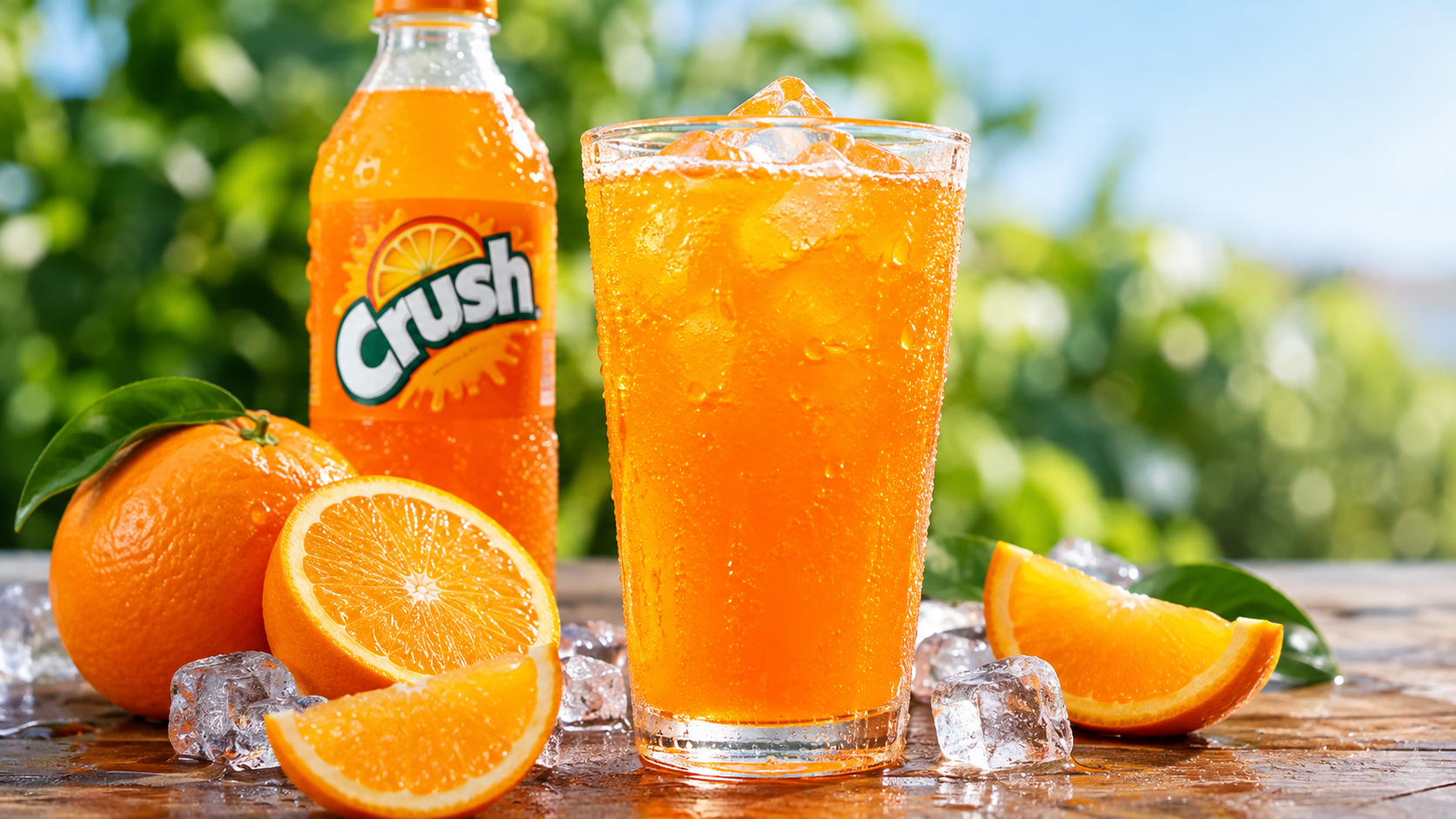
Orange Crush is a name associated with several things, but it is best known as a classic orange-flavored soft drink. Over the years, the brand has become recognizable for its bright citrus flavor, orange color, and distinctive combination of sweetness and carbonation. For many people, Orange Crush represents a nostalgic soda experience, while for others, it is simply a refreshing fruit-flavored beverage.
This guide explains what Orange Crush is, where the name comes from, how its flavor compares with other orange sodas, what ingredients and nutritional considerations consumers should know, and how the drink is commonly enjoyed. It also covers frequently asked questions and related topics people may search for when researching Orange Crush.
What Is Orange Crush?
Orange Crush is a carbonated orange-flavored soft drink. It belongs to the Crush family of fruit-flavored sodas, which also includes other flavors such as grape and strawberry.
The drink is designed around a sweet citrus profile. Its orange flavor gives it a fruity character, while carbonation provides the familiar fizzy sensation associated with soft drinks.
Orange Crush can be purchased in different package formats depending on the market, including individual bottles, cans, and larger bottles.
Quick Facts About Orange Crush
| Feature | Details |
|---|---|
| Product type | Carbonated soft drink |
| Main flavor | Orange |
| Flavor profile | Sweet, citrusy, fruity |
| Category | Fruit-flavored soda |
| Common formats | Cans and bottles |
| Typical use | Cold beverage, meals, gatherings, mixers |
| Brand family | Crush |
Because formulations, package sizes, and availability can vary by country, consumers should check the product label in their market for the most accurate current information.
Orange Crush History
The history of Orange Crush is connected to the development of flavored carbonated beverages in North America. Crush became associated with fruit-flavored sodas during a period when manufacturers were developing new ways to give soft drinks distinctive fruit identities.
Orange Crush eventually became one of the recognizable names in orange soda. Its bright branding and citrus flavor helped distinguish it from cola-based beverages.
The brand's long presence in the soft-drink market also contributed to its nostalgic appeal. Orange soda has traditionally been associated with casual meals, summer refreshment, convenience stores, parties, and family gatherings.
How Orange Soda Became Popular
Orange-flavored soft drinks have remained popular for several reasons:
- Distinctive flavor: Orange offers a recognizable combination of sweetness and citrus.
- Bright appearance: Orange coloring gives the beverage an immediately identifiable look.
- Refreshing carbonation: Bubbles complement the citrus flavor.
- Nostalgia: Many consumers associate orange soda with childhood memories and special occasions.
- Versatility: Orange soda can be served by itself or used in different beverage combinations.
What Does Orange Crush Taste Like?
Orange Crush generally has a sweet orange flavor with noticeable citrus character and carbonation.
Compared with orange juice, it is much sweeter and more carbonated. It is also designed as a flavored soft drink rather than a direct substitute for fresh fruit.
The exact taste can depend on factors such as serving temperature, package type, and the formulation sold in a particular market.
For the best experience, many people prefer orange soda chilled. Serving it over ice can make it feel even more refreshing, although melting ice gradually dilutes the flavor.
Orange Crush Ingredients
The exact ingredient list can differ depending on the product version and country where it is sold. A typical orange-flavored soft drink may contain components such as:
- Carbonated water
- Sweeteners
- Orange flavoring
- Citric acid or other acidity regulators
- Preservatives where permitted
- Color additives
- Other ingredients used to maintain flavor and stability
The product label is the most reliable source for the current formulation.
Why Checking the Label Matters
Consumers sometimes assume that every Orange Crush product has exactly the same ingredients. That is not necessarily the case.
Formulations may change because of:
- Different countries and food regulations
- Regular versus reduced-sugar versions
- Changes made by the manufacturer
- Different package sizes or product varieties
If you have allergies, dietary restrictions, or specific nutritional goals, always check the current packaging before consuming the product.
Orange Crush Nutrition
Like other sweetened soft drinks, regular Orange Crush can contribute a significant amount of added sugar to a person's daily diet depending on the serving size.
The nutritional information printed on the package should be used when determining calories, carbohydrates, sugars, and other nutrients.
| Nutritional Consideration | What to Check |
|---|---|
| Serving size | Compare the serving size with the amount you actually drink |
| Calories | Check calories per serving |
| Total carbohydrates | Useful for tracking carbohydrate intake |
| Added sugars | Important when monitoring sugar consumption |
| Caffeine | Check the specific product label |
| Sweeteners | Review the current ingredient list |
Is Orange Crush Healthy?
Orange Crush is best considered an occasional soft drink rather than a nutritional replacement for water, whole fruit, or other nutrient-rich foods.
Regular versions of sugary soda can add considerable sugar and calories to a diet without providing the same nutritional benefits associated with whole oranges.
For everyday hydration, water remains a simple choice. People who enjoy orange soda can still include it occasionally while paying attention to serving size and overall dietary intake.
Regular Orange Crush vs. Other Orange Sodas
Orange Crush competes in a broad category that includes several well-known orange-flavored beverages.
The biggest differences usually involve sweetness, carbonation, flavor intensity, aftertaste, and formulation.
| Beverage Type | General Flavor Character | Typical Experience |
|---|---|---|
| Orange Crush | Sweet and citrus-forward | Fruity and fizzy |
| Orange soda alternatives | Varies by brand | Can range from mild to intensely sweet |
| Orange juice | Natural citrus flavor | Non-carbonated and fruit-based |
| Orange sparkling water | Light citrus | Less sweet or unsweetened |
| Orange-flavored energy drinks | Citrus with additional flavors | Often stronger and more complex |
There is no universal "best" orange soda because taste is subjective. Someone who prefers a strong, sweet orange flavor may have a different favorite from someone who likes a lighter citrus beverage.
Why Do People Like Orange Crush?
The appeal of Orange Crush goes beyond its flavor.
1. Nostalgic Appeal
Long-running soft-drink brands can become connected with personal memories. Someone may remember drinking orange soda at a family event, restaurant, picnic, or movie night.
2. Strong Citrus Identity
Orange Crush does not attempt to imitate cola. Its identity is built around orange flavor, making it easy to recognize.
3. Refreshing When Served Cold
Carbonation and a cold serving temperature can make the beverage particularly appealing on warm days.
4. Easy Availability
Depending on the market, Orange Crush can be found through grocery stores, convenience retailers, restaurants, vending machines, and online sellers.
5. Familiar Brand
A recognizable brand can make consumers comfortable choosing a product they already know.
Best Ways to Enjoy Orange Crush
There is no single correct way to drink Orange Crush, but several serving methods are common.
Drink It Chilled
The simplest approach is to refrigerate the bottle or can and serve it cold.
Serve It Over Ice
Pouring Orange Crush over ice creates a cold, casual beverage for meals or gatherings.
Pair It With Food
Orange soda can work with foods that benefit from a sweet and citrusy contrast.
It may be served alongside:
- Burgers
- Pizza
- Fried chicken
- Sandwiches
- Fries
- Barbecue
- Snacks
- Casual party foods
The ideal pairing ultimately depends on personal taste.
Orange Crush as a Party Drink
Orange soda can be useful at parties because it is easy to serve and appeals to people who want a non-alcoholic beverage.
For gatherings, hosts can provide:
- Chilled cans
- Individual bottles
- Cups and ice
- Orange slices for decoration
- Water and other beverage choices
Providing several options is especially useful because not everyone wants a sweet carbonated drink.
Orange Crush and Cocktails
Orange soda can also appear in mixed drinks and cocktail recipes. However, the specific recipe depends on the other ingredients and the desired flavor.
For non-alcoholic versions, orange soda can be combined with ingredients such as fruit juices or additional citrus flavors.
When using soda in a mixed beverage, it is usually best to add the carbonated component toward the end. This helps preserve carbonation.
Orange Crush vs. Fresh Orange Juice
Although both involve orange flavor, Orange Crush and orange juice are fundamentally different beverages.
| Category | Orange Crush | Orange Juice |
|---|---|---|
| Carbonated | Yes | No |
| Main character | Sweet orange soda | Citrus fruit |
| Added sweeteners | Depends on product | Depends on product |
| Fiber | Generally very little | Varies by product and pulp level |
| Main purpose | Refreshment | Fruit beverage |
| Processing | Carbonated soft drink | Juice processing |
Fresh oranges also provide nutrients and dietary fiber that should not be equated with a flavored soft drink.
Does Orange Crush Contain Real Oranges?
The answer depends on the specific formulation and market. An orange-flavored soda is not automatically equivalent to a beverage made primarily from orange juice.
Consumers who want to know whether a particular product contains orange juice or specific orange-derived ingredients should check its current ingredient statement and product description.
This distinction is important because "orange flavor" and "orange juice" describe different things.
Common Mistakes People Make When Buying Orange Crush
Mistake 1: Ignoring Serving Size
A large bottle may contain multiple servings. Drinking the entire container means consuming more calories and sugar than the amount listed for one serving.
Mistake 2: Assuming Every Version Is Identical
Different markets and product variations can have different formulations.
Mistake 3: Confusing Soda With Fruit Juice
Orange soda provides a flavored, carbonated experience. It should not automatically be treated as a nutritional substitute for fruit or juice.
Mistake 4: Not Checking Dietary Information
People following specific diets should examine the package rather than relying on assumptions about sweeteners or ingredients.
Mistake 5: Storing It Incorrectly
Heat can negatively affect the overall drinking experience. Keeping carbonated beverages appropriately stored and chilled before serving generally provides a better experience.
How to Store Orange Crush
Unopened soft drinks should be stored according to the manufacturer's recommendations and away from conditions that could damage the package.
Once opened, refrigeration can help maintain a more enjoyable taste and temperature. Carbonation gradually decreases after opening, so consuming the beverage relatively soon generally provides a better fizzy experience.
Avoid freezing a sealed carbonated beverage because expansion can damage the container.
Frequently Asked Questions About Orange Crush
Is Orange Crush an orange soda?
Yes. Orange Crush is a carbonated orange-flavored soft drink and is commonly categorized as orange soda.
Does Orange Crush have caffeine?
Caffeine content can depend on the specific Orange Crush product and market. Check the current nutrition label or ingredient information on the package for the exact product you have.
Is Orange Crush made with orange juice?
Orange Crush is an orange-flavored soft drink, which is different from ordinary orange juice. Whether a particular formulation contains any juice should be confirmed from its current ingredient list.
What does Orange Crush taste like?
It has a sweet, fruity orange flavor combined with carbonation. The exact taste can vary slightly depending on the product version and serving conditions.
Can Orange Crush be used in mixed drinks?
Yes. Orange soda can be used as an ingredient in both alcoholic and non-alcoholic mixed beverages. Recipes vary depending on the desired flavor.
Is Orange Crush the same as orange juice?
No. Orange Crush is a carbonated soft drink, while orange juice is a fruit-based beverage. They have different ingredients, nutritional profiles, and preparation methods.
Can Orange Crush be stored after opening?
Yes. It can be refrigerated after opening, although carbonation will gradually decrease over time.
Where can I buy Orange Crush?
Availability depends on the country and retailer. It may be sold in grocery stores, convenience stores, restaurants, vending locations, and online marketplaces.
Final Thoughts on Orange Crush
Orange Crush has maintained its identity as a recognizable orange-flavored soft drink by combining sweet citrus flavor with carbonation and distinctive branding. Its appeal comes partly from its taste and partly from the nostalgia associated with established soft-drink brands.
For consumers, the most important things to remember are simple: check the current product label, pay attention to serving size, and recognize that orange soda is a treat rather than a substitute for whole fruit or water.
Whether enjoyed cold with a meal, served at a party, or remembered as a favorite childhood drink, Orange Crush remains a familiar choice for people who enjoy sweet and fizzy orange flavor.