

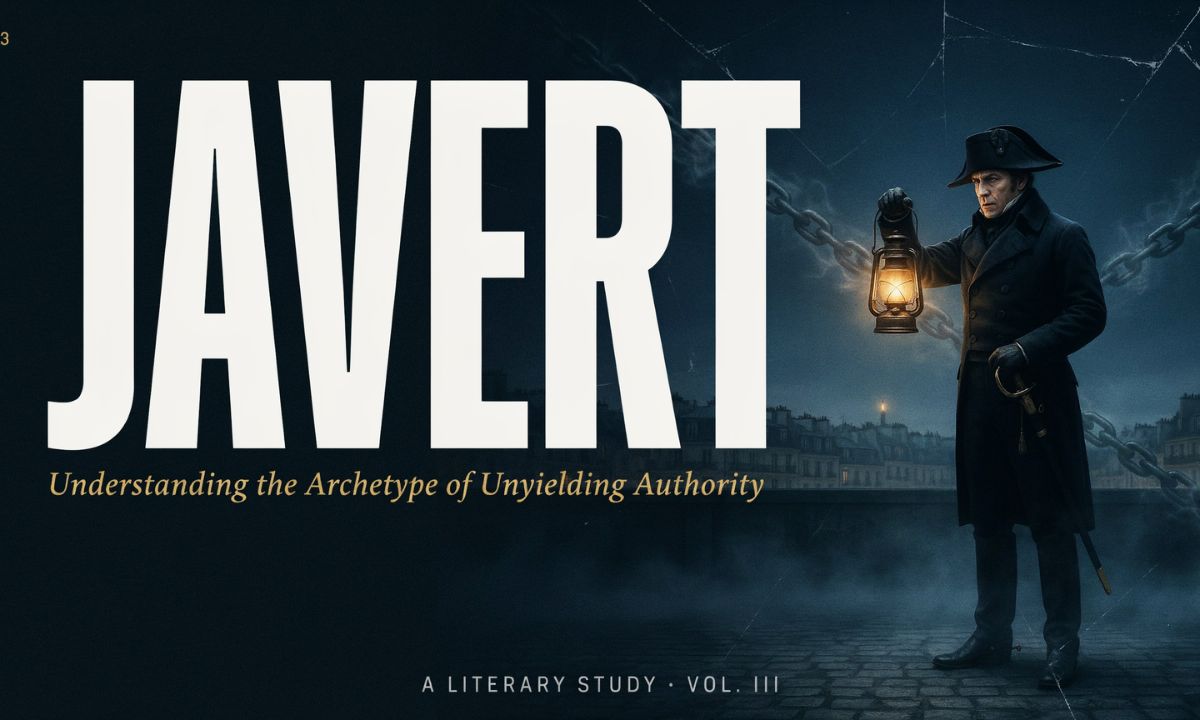
Javert Meaning: Understanding the Archetype of Unyielding Authority
When you think about unforgettable literary characters, Javert from Victor Hugo’s Les Misérables stands out for all the wrong reasons. He’s not a villain in the traditional sense. He doesn’t scheme or plot for personal gain. Yet his relentless pursuit of Jean Valjean creates one of literature’s most compelling moral dilemmas. Understanding the Javert meaning requires looking beyond his job title and examining what he represents about human nature, justice systems, and the cost of inflexibility.
The name Javert has become something larger than a single character. It now represents a type of person: someone so committed to rules that they lose sight of the humanity behind them. In our modern world, where debates about justice reform and compassion constantly dominate conversations, Javert remains surprisingly relevant. His story asks uncomfortable questions about whether laws always serve justice, or whether justice sometimes requires stepping outside laws.
What Is Javert? The Character and the Symbol
Javert starts as a police inspector in Hugo’s novel. His entire life revolves around one mission: enforce the law without exception. He views crime not as something that happens when people are desperate, but as an inherent character flaw. Once a criminal, always a criminal, in his mind.
What makes Javert fascinating rather than simply unlikeable is his sincerity. He doesn’t enforce laws cruelly because he enjoys it. He does it because he genuinely believes it protects society. He sees himself as a guardian of order in a chaotic world. That disconnect between intention and impact is what gives the character such staying power.
Over decades, the Javert meaning has expanded beyond the fictional character. Today, when people describe someone as acting like Javert, they’re usually pointing out that this person applies rules with such rigidity that they ignore context, compassion, or common sense. It’s become shorthand for legalism without justice.
The Core Conflict: Law Versus Human Complexity
Javert’s worldview rests on a simple foundation: people are responsible for their choices, and society requires consistent punishment for rule-breaking. This isn’t unreasonable. We do need consequences for harmful actions. The problem emerges when Javert extends this principle to its absolute extreme.
Consider how he perceives Jean Valjean. Valjean stole bread years ago while his sister’s children starved. Society’s response was to imprison him for nineteen years. By the time he escapes, he has suffered extensively. Yet Javert never acknowledges this context. The theft happened. Punishment is owed. Everything else is irrelevant.
This approach creates a logical trap. If people are defined entirely by their worst mistakes, redemption becomes impossible. Growth becomes irrelevant. Change becomes meaningless. Javert’s system leaves no room for the complicated reality of human experience.
Historical Context: How Javert’s Worldview Developed
Understanding Javert requires understanding his background. Hugo reveals that Javert was born in a prison. His father was an inmate. His mother was a fortune teller of low reputation. Growing up surrounded by criminality shaped Javert’s thinking profoundly.
Rather than accepting his origins, Javert spends his entire life running from them. He chooses the opposite of his parents: absolute obedience, complete devotion to authority, perfect discipline. It’s a response born from shame and fear, though Javert himself never acknowledges this.
This background matters because it reveals something important about the Javert meaning. His rigidity isn’t truly about justice. It’s about the need to create distance between himself and his origins. By becoming the ultimate enforcer of law, Javert feels he’s transcended his criminal family background. But this strategy requires him to believe that people never truly change, because if they could, he’d have to confront uncomfortable truths about his own parents.
The Turning Point: When Mercy Destroys Everything
The critical moment in understanding Javert’s character comes when Valjean has him completely at his mercy. Valjean could kill Javert. He has every reason to. Instead, he lets Javert go.
This act shatters Javert’s entire worldview. How can a criminal act more morally than a police officer? How can someone he views as fundamentally corrupt show genuine compassion? The contradiction is too much for Javert’s black-and-white thinking to accommodate.
This moment crystallizes what the Javert meaning represents: the danger of holding worldviews so rigid that reality itself becomes threatening. Javert can’t simply acknowledge that Valjean is a good person. That would require admitting his entire understanding of human nature is incomplete. It would mean accepting that his father might have been capable of change too. It would suggest that his devotion to rules has caused unnecessary suffering.
Rather than adapt, Javert breaks. The destruction comes not from external forces, but from his own inability to adjust his thinking. He has made himself dependent on a belief system that can’t survive contact with a more complex reality.
Modern Applications: Javert in Today’s World
The Javert archetype doesn’t live only in literature. You encounter it regularly in modern institutions and workplaces.
The HR manager who fires an employee for a single policy violation, regardless of their ten years of excellent service and the family emergency that caused the lapse.
The teacher who enforces zero-tolerance policies so strictly that they punish children equally for minor mistakes and serious misconduct.
The bureaucrat who denies a widow her deceased husband’s benefits because she missed a deadline by three days, unable to consider her grief and confusion.
The landlord who evicts a family because they were one day late on rent, despite consistent payment history and genuine hardship.
In each case, we see the Javert pattern: someone so committed to rules that they lose perspective on whether those rules are actually serving their intended purpose. Rules exist to create order and fairness, but taken to extremes, they create injustice.
| Javert-Like Behavior | What’s Missing | Better Approach |
| Applying rules uniformly without considering context | Compassion and judgment | Rules as guidelines, adapted for circumstances |
| Believing people can’t change | Understanding of human growth | Support for transformation and redemption |
| Following procedures mechanically | Connection to purpose | Asking why rules exist |
| Punishing rule-breaking universally | Fairness and proportion | Responses matched to severity and circumstances |
| Seeing people as their worst moments | Recognition of complexity | Seeing people’s whole selves |
The Paradox of the Just Javert
Here’s what makes this character so interesting: Javert isn’t wrong about everything. Laws do create structure. Consequences do matter. Consistency has value. A society where everyone ignores rules whenever they feel like it would be chaotic and terrible.
The mistake isn’t believing in justice or rules. It’s believing these are the only things that matter.
Real justice requires both accountability and compassion. It requires rules and the wisdom to interpret them fairly. It requires consequences paired with opportunities for redemption. When you remove any of these elements, you get either chaos or cruelty.
Javert’s tragedy is that he eliminates compassion and wisdom completely, leaving himself with only rigid rules. He becomes the embodiment of blind justice, literally unable to see past his own enforcement.
Psychological Dimensions: Why Javert Can’t Change
From a psychological perspective, Javert’s inability to adapt isn’t simple stubbornness. It’s a deeply rooted defense mechanism. His entire identity is built on the distinction between criminals (his past) and law enforcers (his present).
When Valjean’s mercy proves this distinction false, it threatens Javert’s sense of self. The psychological threat feels equivalent to physical danger. His ego doesn’t just feel wrong. It feels like it’s dissolving.
This explains why Javert doesn’t gradually come to accept Valjean’s goodness. Instead, he catastrophically breaks. He can’t find a middle ground because he’s spent decades ensuring there is no middle ground in his thinking.
People like Javert need to maintain their identity structure to function. When that structure crumbles, they crumble with it. This is why his ending isn’t truly redemptive. He doesn’t learn. He simply becomes unable to continue.
Comparing Javert and Valjean: Two Paths to Understanding
The genius of Hugo’s novel is the contrast between these two men. They’re both shaped by suffering. Both have dedicated their lives to something larger than themselves. But they draw completely opposite conclusions.
Valjean’s suffering leads him toward understanding that people are complicated and capable of change. He becomes patient with others’ struggles because he remembers his own. His initial crime was motivated by desperation, his years of imprisonment were brutal, his escape was driven by survival instinct. Yet instead of blaming society or using these facts to excuse his actions, he takes responsibility and does better.
Javert’s suffering leads him to reject ambiguity entirely. He can’t accept his origins, so he invents a moral system where no one with a criminal past could possibly be good. He creates the opposite of flexibility, turning himself into something mechanical and inhuman.
Both men are defined by poverty and desperation at crucial moments. Both could have become bitter or destructive. Instead, they become living arguments about whether difficulty explains behavior or determines it permanently.
Common Misconceptions About Javert
Many people view Javert as simply evil or cold-hearted. This misses the point entirely. Javert is neither. He’s conscientious, dedicated, and genuinely convinced he’s doing the right thing. That’s precisely what makes him dangerous.
Another misconception is that his story is about the failure of law enforcement. It’s not. It’s about what happens when any institution becomes so rigid that it serves its own rules rather than its purpose. You can see this in education, healthcare, government, corporate management, and organized religion.
A third confusion involves thinking Javert represents all authority figures. That’s also wrong. Many people in positions of power manage to balance rules with judgment, consistency with compassion. Javert represents those who can’t.
Practical Lessons from Javert’s Story
What should we take from understanding the Javert meaning? Several practical lessons emerge.
First, beware of people who never question rules. Healthy systems have people willing to ask “why does this rule exist?” and “is it still serving its purpose?” If everyone simply enforces without questioning, systems become disconnected from reality.
Second, be suspicious of anyone claiming complete certainty about human nature. Real people are complicated. Anyone who believes you can categorize humans as simply “good” or “bad” based on one incident has simplified the world dangerously.
Third, recognize that inflexibility protects people from difficult truths. When Javert refuses to acknowledge Valjean’s goodness, he’s protecting himself from having to reconsider his father, his childhood, his life choices. Understanding this makes Javert tragic rather than contemptible.
Fourth, remember that systems need people willing to exercise judgment, not just enforce rules. Good managers, teachers, doctors, and leaders all do this constantly. They follow rules as guidelines while staying focused on actual outcomes.
FAQ: Understanding Javert Meaning in Different Contexts
What does it mean when someone is called a Javert
It typically suggests they follow rules so rigidly that they miss the point of those rules. They enforce without judgment, apply rules uniformly regardless of context, and struggle to acknowledge human complexity or capacity for change.
Is Javert representing the police, or all authority figures
While Hugo makes him a police inspector, the character actually represents a type of thinking that can appear in any authority role. Teachers, managers, bureaucrats, and leaders can all become “Javert-like” when they prioritize rules enforcement over actual outcomes.
Can modern society function without some Javert-type thinking
Absolutely. But it also needs people who understand that rules are tools, not ends in themselves. A completely rule-bound society becomes oppressive. A completely flexible society becomes chaotic. The answer is balance, which Javert represents the failure of.
Does understanding Javert make his actions forgivable
Not entirely. Understanding why someone acts a certain way is different from excusing harm caused by those actions. We can have compassion for Javert while recognizing that his approach to justice was damaging.
What’s the difference between Javert and someone who simply values discipline
Discipline focused on helping others is healthy. Discipline focused on punishment and control is Javert-like. The difference lies in whether rules are meant to serve people or whether people are meant to serve rules.
Conclusion: The Enduring Relevance of Javert
More than 150 years after Les Misérables was published, Javert remains a powerful symbol. Not because his character is unusual, but because he represents patterns we see everywhere: institutions that lose sight of their purpose, people who hide from difficult truths through rigid thinking, and systems that confuse rule-following with justice.
The Javert meaning ultimately asks us to examine our own lives. Where do we apply rules mechanically rather than thoughtfully? When do we refuse to acknowledge others’ capacity for growth? In what ways do we use systems and structures to avoid uncomfortable truths?
Real justice requires more than laws. It requires people willing to ask whether those laws are working, whether they’re being applied fairly, and whether room exists for understanding and redemption. A society that manages this balance creates opportunity for both accountability and growth.
Javert couldn’t make that balance. He chose absolute certainty over messy humanity. In the end, he becomes not the protector of society he imagined, but a cautionary tale about what happens when we mistake rigidity for principle. That’s why his story continues to matter in conversations about how we should live, how we should lead, and what justice actually requires.