
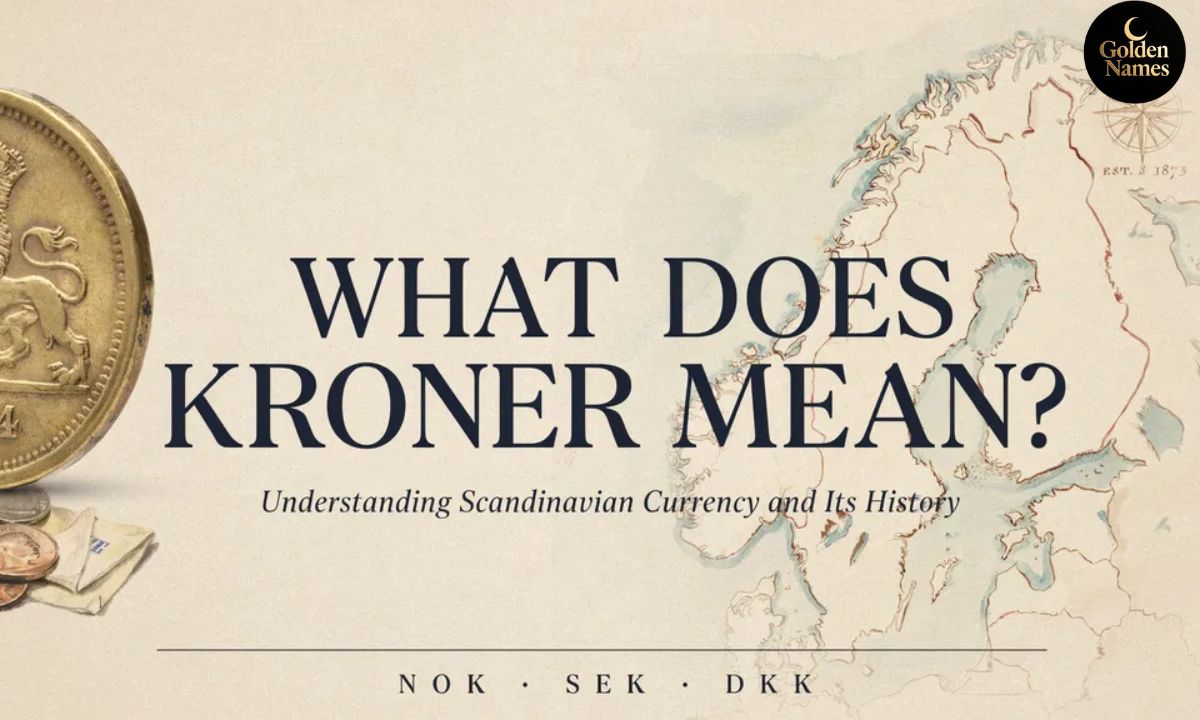
If you’ve come across the word “kroner” while reading about finances, traveling, or learning about world currencies, you’re likely wondering what it actually means and why it matters.
Whether you’re planning a trip to Scandinavia, studying international money systems, or simply curious about different cultures and their languages, this guide will help you understand everything about kroner, from its literal meaning to its practical use in today’s world.
The Basic Meaning of Kroner
Kroner is simply the plural form of the word “krone,” which is the currency unit used in several Scandinavian countries. The term comes from the Scandinavian and Germanic word meaning “crown.” Just like how we might say “dollars” or “euros,” when people talk about “kroner,” they’re referring to multiple units of this currency.
Think of it this way: if one unit of currency is a krone, then more than one is “kroner.” It’s similar to how one penny becomes multiple pennies, or one euro becomes euros. This linguistic pattern is common across many European languages.
The most important thing to know is that kroner isn’t a single, unified currency across all of Scandinavia. Instead, three separate Scandinavian countries use their own versions of the krone:
- Denmark uses the Danish krone (DKK)
- Norway uses the Norwegian krone (NOK)
- Sweden uses the Swedish krona (SEK)
Each of these operates independently, with different exchange rates and values in relation to other currencies like the euro or the dollar.
The Historical Roots: Why “Crown”?
Understanding why the currency is called a “crown” tells us something interesting about European history and tradition. The word “krone” comes from the medieval practice of stamping royal crowns onto coins as a symbol of a ruler’s authority and power. Coins with crowns on them represented the legitimacy of the monarch issuing them.
This naming convention became common across Northern Europe. Even today, currencies in various European countries carry names rooted in royal symbolism. For example, the Czech koruna and the Hungarian forint also have historical connections to crowns and royal authority.
When Scandinavia established its modern currency systems, maintaining the “krone” name honored this historical tradition while also asserting national identity. The crown symbol continues to appear on Scandinavian krone coins and notes today, serving as a visual link to the past.
The Three Scandinavian Kroner: What You Need to Know
Danish Krone (DKK)
The Danish krone is used exclusively in Denmark and is subdivided into 100 øre. It’s one of the older modern currencies in Europe and has maintained relatively strong stability over the years.
Interestingly, Denmark is part of the European Union but chose not to adopt the euro, keeping its independent currency instead. This decision reflects Denmark’s desire to maintain monetary autonomy while participating in EU membership.
Norwegian Krone (NOK)
Norway’s currency, the Norwegian krone, is used throughout the country and is also subdivided into 100 øre. Norway, like Denmark, is not a member of the eurozone, preferring to manage its own monetary policy.
Norway’s economy is heavily influenced by oil production, which affects the krone’s value. When global oil prices rise, the Norwegian krone typically strengthens. This makes the NOK particularly interesting for investors and those tracking commodity markets.
Swedish Krona (SEK)
Sweden uses the Swedish krona, which is also subdivided into 100 öre. While Sweden is a member of the European Union, it similarly chose not to adopt the euro, maintaining the krona as its currency.
Sweden’s currency is particularly relevant in international markets due to Sweden’s strong economy and influential role in global finance and technology.
How Kroner Differs From the Euro
You might wonder why some Scandinavian countries didn’t simply use the euro like most other European nations. This is actually a fascinating question that reveals important information about monetary independence and national economics.
When the euro was established in 1999 (with physical currency starting in 2002), only some European Union members adopted it. Denmark, Norway, and Sweden made different choices:
- Denmark maintained the krone but pegged it closely to the euro
- Norway, not being in the EU, kept the krone independently
- Sweden kept the krona while being EU members
These countries prefer having their own monetary policies, meaning they can adjust interest rates and money supply based on their specific economic needs rather than following eurozone-wide policies set by the European Central Bank.
Practical Use: What Kroner Means for Travelers and Traders
If you’re planning a trip to Denmark, Norway, or Sweden, understanding what kroner means in practical terms is essential.
For Travelers: When you visit one of these countries, you’ll need local currency. ATMs are widely available, and you can withdraw kroner directly. Credit cards are also accepted almost everywhere, though having some cash is still useful, especially in smaller towns or rural areas.
For Online Shoppers: If you’re buying goods from Scandinavian websites, prices are often listed in the local krone. Understanding the exchange rate helps you know what you’re actually paying.
For Investors: Currency traders closely watch the three Scandinavian currencies. They’re considered relatively stable and are frequently traded on foreign exchange (forex) markets. Economic news from these countries, employment figures, interest rate decisions, or oil prices, can cause fluctuations in krone values.
For Businesses: Companies operating internationally often need to manage kroner as part of their foreign exchange strategy. Whether a business is importing goods from Scandinavia or exporting to these markets, understanding krone valuation is part of international commerce.
Exchange Rates: Understanding Krone Value
The value of each krone fluctuates daily based on global market conditions. Exchange rates are determined by supply and demand, how much of a currency people want to buy versus sell.
Several factors influence krone exchange rates:
- Economic Performance: Strong job growth and business development make investors want more of that currency
- Interest Rates: Higher interest rates attract foreign investors seeking better returns
- Commodity Prices: Especially for the Norwegian krone, oil prices matter significantly
- Political Stability: Countries with stable governments typically have stronger currencies
- Inflation Rates: Lower inflation usually strengthens currency value
When you’re converting kroner to another currency (like dollars or pounds), you’ll get a rate that reflects these market forces. Financial websites and banks provide real-time exchange rate information so you can see exactly what your money is worth.
The Symbolism and Design of Krone Notes and Coins
Walking around Denmark, Norway, or Sweden, you’ll notice that krone notes and coins feature distinctive designs reflecting each country’s culture and values.
Scandinavian currency design is known for being thoughtful and artistic. Bank notes typically feature historical figures, cultural symbols, and natural landscapes. The crown symbolism appears throughout—sometimes literally as a crown image, sometimes more subtly incorporated into the design.
Modern Scandinavian coins and notes reflect the countries’ values: environmental consciousness, cultural heritage, and progressive design thinking. This isn’t accidental; currency design is taken seriously as a representation of national identity.
Krone in Digital Contexts: Cryptocurrency and Modern Finance
As the financial world evolves, the term “krone” appears in new contexts. Some cryptocurrency projects and digital payment systems use “krone” as a reference or name inspiration. However, the traditional krone currencies, DKK, NOK, and SEK, remain the official, government-backed currencies used in everyday transactions in their respective countries.
Central banks in these countries are also exploring digital versions of their currencies, which would essentially be electronic versions of kroner with the same value as physical money.
Common Misconceptions About Kroner
Myth 1: “Kroner” is one unified Scandinavian currency Reality: Each Scandinavian country has its own separate krone with different exchange rates.
Myth 2: Scandinavian countries use the euro Reality: While part of the EU, Denmark and Sweden chose to keep their own currencies. Norway isn’t even in the EU.
Myth 3: Kroner is worth less than euros Reality: This varies. At different times, various krone currencies have been stronger or weaker than the euro depending on economic conditions.
Myth 4: You can’t use kroner outside Scandinavian countries Reality: While kroner is primarily used in its home country, any currency can be exchanged for another at banks and currency exchange services worldwide.
Frequently Asked Questions About
Can I use Danish kroner in Norway or Sweden
No. Each country uses its own currency exclusively. You’ll need to exchange Danish kroner for Norwegian krone if traveling from Denmark to Norway, for example.
What’s the smallest unit of kroner
The smallest standard unit is 1 øre (100 øre = 1 krone), though some countries have phased out small denominations in recent years due to inflation.
Is kroner a strong currency
Scandinavian currencies are generally considered stable and relatively strong. However, strong depends on what you’re comparing them to and what time period you’re looking at.
Where can I exchange kroner
Banks, currency exchange services, and many ATMs can help you exchange kroner for other currencies. Airports also have currency exchange services, though rates are typically less favorable than banks.
Do Scandinavian countries accept contactless payment instead of physical kroner
Yes, absolutely. Scandinavian countries are highly digitalized, and contactless card payments are extremely common. Many places are even moving toward cashless transactions.
Is the word “krone” spelled differently in different languages
Yes. In Danish and Norwegian, it’s krone. In Swedish, it’s “krona.But all three refer to the same concept, the crown-named currency used in each country.
What happens if Scandinavian countries join the eurozone
If a country adopted the euro, its krone would cease to be used and would be replaced by euro currency. However, there’s no current indication that any of these three countries plan to make this change.
Conclusion
Understanding what kroner means goes beyond just knowing it’s currency. It’s a window into Scandinavian history, economics, and culture. The word itself carries centuries of tradition, representing the crown authority that once stamped these coins and the national identities that Scandinavian countries maintain today.
Whether you’re traveling to Copenhagen, Oslo, or Stockholm, conducting international business, or simply curious about world currencies, knowing what kroner means helps you navigate these economies with confidence. The three Scandinavian krone currencies, Danish, Norwegian, and Swedish, remain important players in global currency markets and everyday transactions in their respective countries.
As the world becomes increasingly digital, the physical kroner coins and notes you might see in Scandinavia are part of a rich cultural heritage. Yet these currencies continue to function as essential economic tools, managed by modern central banks and traded in sophisticated financial markets.
The next time you encounter the word “kroner,” you’ll understand that it’s not just a plural form or a foreign word, it’s a meaningful part of Scandinavian identity, economics, and history, with practical importance for anyone engaging with these dynamic Northern European countries.