

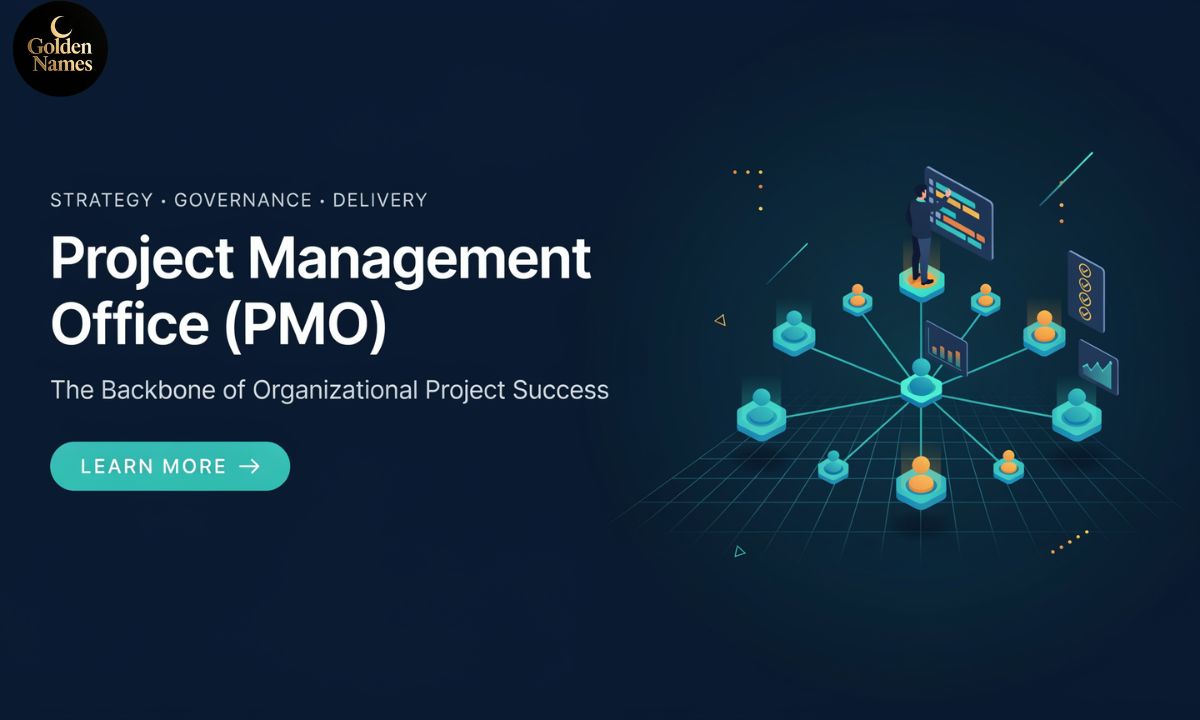
A Project Management Office (PMO) helps businesses manage their projects in a clear and organized way. It creates simple processes that project teams can follow. A PMO also helps teams stay focused on their goals and complete tasks on time. It can track project progress, budgets, resources, and potential risks.
The main purpose of a PMO is to make project management easier and more effective. It helps employees communicate better and work together as a team. A PMO also gives managers useful information to make better decisions. With proper planning and support, it can help businesses complete projects successfully.
What Exactly Is a PMO, and Why Should You Care?
You’ve probably heard someone throw around the term “PMO” in a meeting and wonder what they actually meant. Is it just another corporate acronym? Actually, a project management office has become one of the most valuable strategic assets in organizations that juggle multiple projects at once.
Here’s the thing: when companies run projects without any coordination, chaos happens naturally. One team doesn’t know what another is doing. Budget gets wasted. Deadlines slip. Good talent gets pulled in too many directions. People burn out because nobody has a clear picture of what’s happening across the organization.
A Project Management Office (PMO) solves this problem by creating a centralized hub that standardizes how projects run, keeps everything aligned with business goals, and makes sure resources get used wisely. Think of it as the control center that prevents your organization from turning into a thousand disconnected initiatives all competing for attention.
Breaking Down the PMO Definition
A PMO is essentially a dedicated team or department responsible for establishing and maintaining consistent project management standards across an entire organization. But that’s just scratching the surface.
The real function of a PMO goes beyond creating rules and documentation. It bridges the gap between daily project work and overall business strategy. When your PMO works well, project teams have clear processes they can follow. They know which methodologies to use, what templates to apply, and how to report progress. Meanwhile, leadership gets transparency into whether projects will deliver on time and within budget.
The PMO creates a common language across teams. Instead of one team using Scrum, another using Waterfall, and a third making it up as they go, everyone operates within a shared framework. This consistency matters more than you’d think. When every project follows similar standards, collaboration becomes easier, mistakes drop, and everyone wastes less time figuring out “how do we do things here?”
The Three Types of PMOs: Finding What Fits Your Organization
Not every organization needs the same level of project oversight. That’s why PMOs come in three flavors, each matching different organizational needs and maturity levels.
Supportive PMO: The Helpful Advisor
A supportive PMO acts like your organization’s project management consultant. It provides guidance, templates, training materials, and best practices. Teams can choose to use these resources, but they’re not forced to follow them.
This approach works great for organizations where project managers are experienced and mostly need resources and recommendations. A supportive PMO might create a project kickoff template, offer training on risk management, or share lessons learned from completed projects. Teams appreciate the help without feeling micromanaged.
Real example: A marketing agency with strong, experienced project managers might run a supportive PMO. The PMO provides campaign templates, stakeholder communication frameworks, and client management guidelines. Project managers grab what they need and adapt it to their specific campaigns.
Controlling PMO: The Quality Gatekeeper
The controlling PMO sets standards that projects must follow while allowing teams some flexibility in execution. It’s stricter than a supportive PMO but less hands-on than a directive approach.
A controlling PMO establishes methodologies, requires compliance with governance standards, and monitors whether teams stick to defined processes. Projects might deviate when needed, but they need approval. This type maintains oversight while respecting that different project types may need slightly different approaches.
Example in action: A software development company using a controlling PMO might require all projects to follow Agile principles, but allow individual teams to adjust sprint length based on project complexity. The PMO tracks whether teams are following their defined processes and intervenes if something’s going off track.
Directive PMO: The Full Hands-On Approach
A directive PMO takes ownership of actual project execution. Project managers are either part of the PMO or report directly to it. The PMO maintains tight control over methodologies, resources, staffing, and how projects run day-to-day.
Organizations handling complex, high-risk, or mission-critical projects often choose this route. Construction companies managing large infrastructure projects, government agencies, and healthcare organizations implementing major system changes frequently operate directive PMOs.
The tradeoff? More control and consistency, but less flexibility and more overhead. Teams need to follow the PMO’s way almost exclusively.
PMO vs. Project Manager: Understanding the Key Differences
Here’s where confusion often starts. A project manager and a PMO sound similar, but they’re as different as a ship’s captain and the admiral overseeing the entire fleet.
The Project Manager focuses on one project. They handle daily planning, manage their team members, track progress against milestones, solve problems that come up, and push the project toward completion. They’re experts at their specific initiative. They care about getting their project done on time, within budget, and meeting quality standards.
The PMO Manager thinks at portfolio level, not single-project level. They oversee dozens of projects simultaneously. They don’t execute the day-to-day work (except in directive PMOs). Instead, they create the frameworks that project managers use. They decide which projects get resources and priority. They identify patterns and risks that individual project managers can’t see because they’re focused on their own work.
To visualize it: Project managers are pilots. The PMO is air traffic control. Pilots need to know how to fly their planes excellently. But air traffic control needs to see every flight, manage airspace, prevent collisions, and coordinate the entire system.
This distinction matters because organizations sometimes confuse the two roles and expect a project manager to do PMO work, which burns people out and doesn’t accomplish either job well.
The Five Critical Responsibilities Every PMO Handles
1. Establishing and Enforcing Project Governance
The PMO sets the rules that keep projects in line with organizational policies and regulatory requirements. It defines what documentation needs to exist, what approvals are required, who needs to sign off, and what compliance standards apply.
But enforcement is only half the story. The PMO also monitors project health regularly. It conducts reviews, checks whether projects follow the established standards, and flags compliance issues before they become major problems. A project heading toward missing a deadline or exceeding budget gets caught early, when corrective action actually works.
2. Managing the Project Portfolio and Allocating Resources
Every organization has more ideas for projects than it has people and budget to execute them. The PMO evaluates all proposed projects, weighs them against strategic priorities, and decides which ones actually move forward.
This portfolio-level view prevents the chaos where teams work on projects that don’t matter or spend resources on low-priority work. The PMO ensures that the organization’s best people work on the highest-value initiatives. It balances workload across teams so some aren’t drowning in commitments while others sit idle. Good resource allocation directly impacts delivery quality because teams can actually focus on their committed work instead of constantly context-switching.
3. Standardizing Processes and Methodologies
Imagine if each team invented their own approach to project management. One team uses detailed Gantt charts, another trusts only Agile standups, a third creates massive specification documents. Knowledge sharing becomes nearly impossible. When people move between projects, they start from scratch learning new systems.
The PMO prevents this fragmentation by creating standard processes, templates, and methodologies that everyone uses. Project managers don’t waste energy figuring out the “right way.” They follow proven frameworks that work. Teams speak the same language. Collaboration across projects becomes easier. And standardization reduces errors because people follow tested processes instead of improvising.
4. Tracking Performance and Reporting to Leadership
The PMO measures project performance against KPIs like budget adherence, timeline compliance, and quality metrics. It generates reports and dashboards that give executives real visibility into what’s happening across all projects.
This reporting function does two things. First, it creates accountability. When everyone knows performance is being tracked, quality tends to improve. Second, it enables informed decision-making. Leaders see which projects are struggling, which teams are performing well, and where resources might be getting wasted. They can spot trends and adjust strategy quickly instead of discovering problems when it’s too late to fix them.
5. Managing Risks Across the Portfolio
Individual project managers focus on risks within their specific project. But patterns emerge when you look across the entire portfolio. Maybe three different projects all face supply chain delays. Perhaps several teams are struggling with the same skill gap. The PMO sees these portfolio-level patterns.
By taking a proactive stance on risk, the PMO identifies threats early and develops mitigation strategies. It creates processes for how teams should respond to common problems. This coordinated approach prevents the same mistakes from happening repeatedly across different projects.
What Skills Does a Strong PMO Actually Need?
Running an effective PMO requires a mix of skills that go beyond just understanding project management.
Strategic thinking connects daily project work to the broader business strategy. PMO professionals need to understand not just how to manage projects, but why certain projects matter and how they contribute to organizational goals.
Leadership and influence matter because the PMO guides teams without necessarily having direct authority. PMO professionals influence through expertise, demonstrated value, and credibility.
Communication skills span from explaining complex project metrics to executives to helping project managers understand new processes. Clear communication prevents confusion and builds buy-in.
Data analysis helps the PMO identify patterns in project performance, spot bottlenecks, and make evidence-based decisions about resource allocation and process improvements.
Process design isn’t just about creating documentation. It’s about creating frameworks that teams actually use because they see the value, not because they’re forced to comply.
Real experience managing projects at different scales teaches PMO professionals what project managers face daily. They remember the frustration of bad processes. This experience makes them better at designing processes that actually work in practice, not just in theory.
Certifications like PMP (Project Management Professional), PRINCE2, or PMI-PgMP provide valuable credentials, but most organizations care more about practical experience and the ability to work effectively across teams than specific certifications.
Implementing a PMO: A Realistic Roadmap
Setting up a PMO isn’t an overnight project. Organizations that try to build perfect systems all at once usually create bloated operations that slow everything down. Instead, successful implementations happen in phases.
Step 1: Assess your current situation. Where do projects struggle most? What governance gaps exist? Talk to project managers about their pain points. Ask executives what they need visibility on. Understanding your starting point determines what PMO structure actually helps.
Step 2: Choose your PMO type. Based on your organization’s culture, maturity level, and project complexity, decide whether you need supportive, controlling, or directive oversight. This isn’t permanent, you can evolve as the organization grows. But mismatching your PMO type to your organization creates unnecessary friction.
Step 3: Build core processes first. Don’t try to solve every problem simultaneously. Start with your most painful problems. Maybe that’s resource allocation chaos. Or maybe it’s that projects constantly miss deadlines. Build processes that address these specific pain points, then expand from there.
Step 4: Select tools and technology. Modern PMOs use project management software to track progress, manage portfolios, and generate reports. Choose tools that support your defined processes, not the other way around. Too many organizations pick expensive software then try to force their processes into what the tool allows.
Step 5: Train and support teams. New processes mean people need to learn differently. Provide clear training on new methodologies, templates, and systems. Offer ongoing support as teams adapt. The PMO should actively help project managers succeed with new frameworks, not just enforce compliance.
Step 6: Monitor, measure, and adjust. Track metrics that show whether the PMO actually delivers value. Are projects more successful? Has resource utilization improved? Are budgets more predictable? Be willing to refine processes that create more friction than value. A PMO that doesn’t improve project outcomes is just bureaucracy.
Common PMO Mistakes That Kill Adoption
Organizations often stumble when setting up PMOs. Knowing what goes wrong helps you avoid these pitfalls.
Over-complicating processes. PMOs sometimes create so many templates, forms, and approval steps that project managers spend more time on administration than actual project work. This kills adoption fast. Simpler processes that teams actually use beat complex frameworks that sit on a shelf.
Building without input. The worst PMOs are designed by people who haven’t actually managed projects in years. They create theoretically perfect systems that don’t work in practice. The best PMO processes come from involving experienced project managers in design and getting their feedback.
Treating all projects identically. A small marketing campaign doesn’t need the same governance as a multi-year software implementation. PMOs that force identical processes on wildly different project types create unnecessary bureaucracy. Allow appropriate flexibility based on project scope and risk.
Measuring the wrong things. If your PMO tracks compliance with processes but doesn’t measure whether projects actually succeed, you miss the point. PMO success means better project outcomes, not more paperwork.
Lacking executive support. PMOs that aren’t backed by senior leadership struggle to get buy-in from project teams. When executives don’t visibly support the PMO, people view it as annoying overhead.
Real-World Examples: How PMOs Work in Practice
Financial Services Firm: A mid-sized bank managing 50+ concurrent projects across multiple business units implemented a controlling PMO. Projects of different types (technology initiatives, regulatory compliance, business process changes) follow consistent governance but with flexibility for different methodologies. The PMO consolidated reporting that previously came separately from each unit, giving executives clear visibility. Project success rates improved from 65% to 82% within two years.
Manufacturing Company: Managing plant modernization, supply chain optimization, and quality improvement simultaneously, this company needed tight coordination. A directive PMO ensured all capital projects followed rigorous standards and shared resources efficiently. The PMO prevented scheduling conflicts that would have forced shutdown of multiple facilities simultaneously.
Consulting Firm: With project managers serving different client industries, a supportive PMO provided templates, training, and best practices without mandating one methodology. Project managers appreciated guidance while maintaining flexibility for client needs. The PMO became valuable because it genuinely helped people work better, not because it enforced compliance.
Frequently Asked Questions
How long does it take to implement a PMO
Most organizations see initial value within 3-6 months but need 18-24 months to mature. Success depends on organizational readiness, complexity, and how much change management you do. Rushing implementation creates resistance.
What’s the typical PMO team size
It varies wildly based on organization size and complexity. A small company might have one PMO manager. A large enterprise might have 15-20 people. A reasonable guideline is one PMO person per 5-10 project managers, but context matters tremendously.
Can we start with a supportive PMO and move to controlling later
Absolutely. That’s a common evolution. Start with guidance and resources, see what works, gradually establish standards once teams understand the value. This organic growth builds better buy-in than forcing structure immediately.
How do we measure whether our PMO is actually working
Track metrics like project success rate (on-time and on-budget delivery), resource utilization, average project delivery time, stakeholder satisfaction, and budget variance. Compare these before and after PMO implementation.
What if teams resist the PMO
Resistance usually signals that the PMO either solved the wrong problems or implemented solutions poorly. Listen to the resistance. Maybe the PMO is too controlling. Maybe templates are too rigid. Maybe communication was weak. Resistance is feedback,use it to improve.
Why PMOs Matter Now More Than Ever
Organizations that successfully manage multiple concurrent projects with limited resources have a significant competitive advantage. They deliver value faster. They waste less money. They keep talented people from burning out.
PMOs create this capability. They’re not exciting or glamorous. Nobody gets excited about standardized project templates. But they create the organizational discipline that turns chaos into coordinated execution.
The best PMOs don’t announce themselves. Project managers just notice they have clearer processes. Executives see better reports. Teams deliver more consistently. Resources get used more wisely. The PMO works in the background, quietly making the entire organization function better.
If your organization struggles with project coordination, competing priorities, or resource waste, a PMO isn’t a luxury. It’s a practical solution that delivers measurable results. The question isn’t whether you need a PMO. It’s when you’ll implement one, and what type will actually fit your organization’s culture and needs.
Start small. Solve real problems. Get executive support. Involve project managers in design. Measure whether it works. Build from there. That’s how organizations create PMOs that actually succeed.