

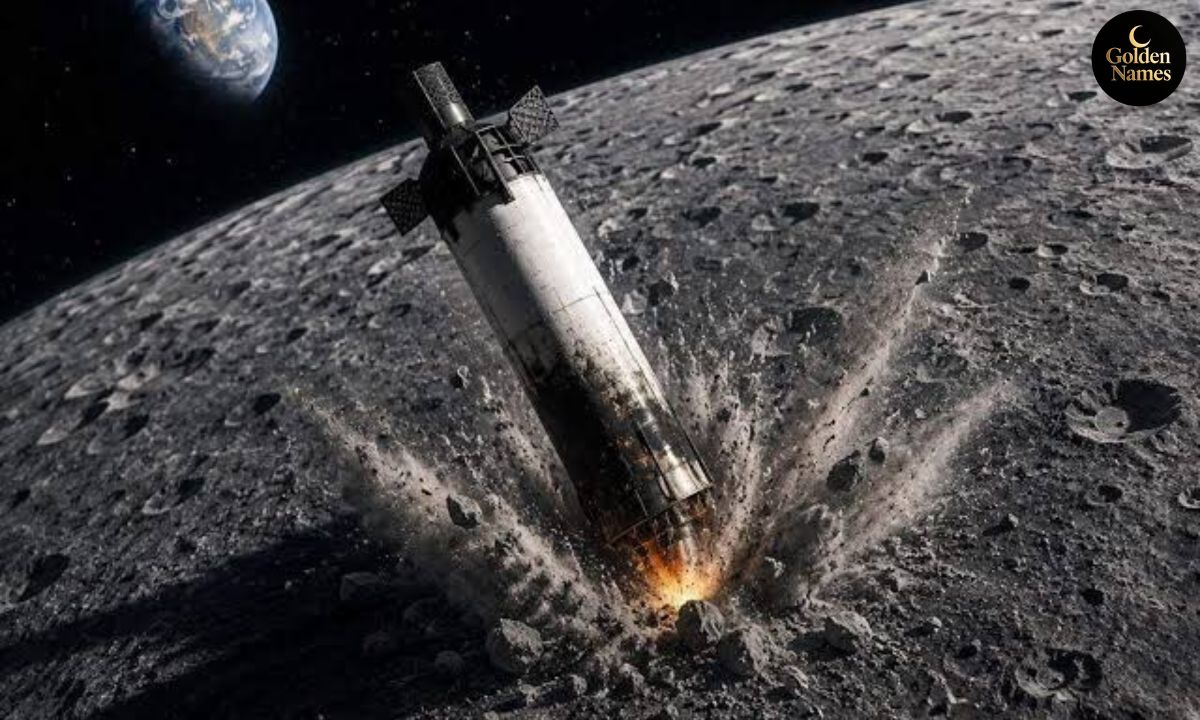
When most people think about space exploration, they picture successful missions, gleaming spacecraft, and triumphant landings. But on August 5, 2026, something different happened. A piece of SpaceX hardware that had been drifting through space for nearly two years finally met its inevitable end,crashing into the lunar surface at an astonishing 5,400 miles per hour.
This wasn’t a catastrophe. It wasn’t even particularly surprising to the scientists who track these things. Yet it was a moment worth paying attention to. Here’s what actually went down, why it matters for the future of space exploration, and what it tells us about the growing clutter in our cosmic backyard.
The Crash: A School Bus-Sized Rocket Piece Hits the Moon
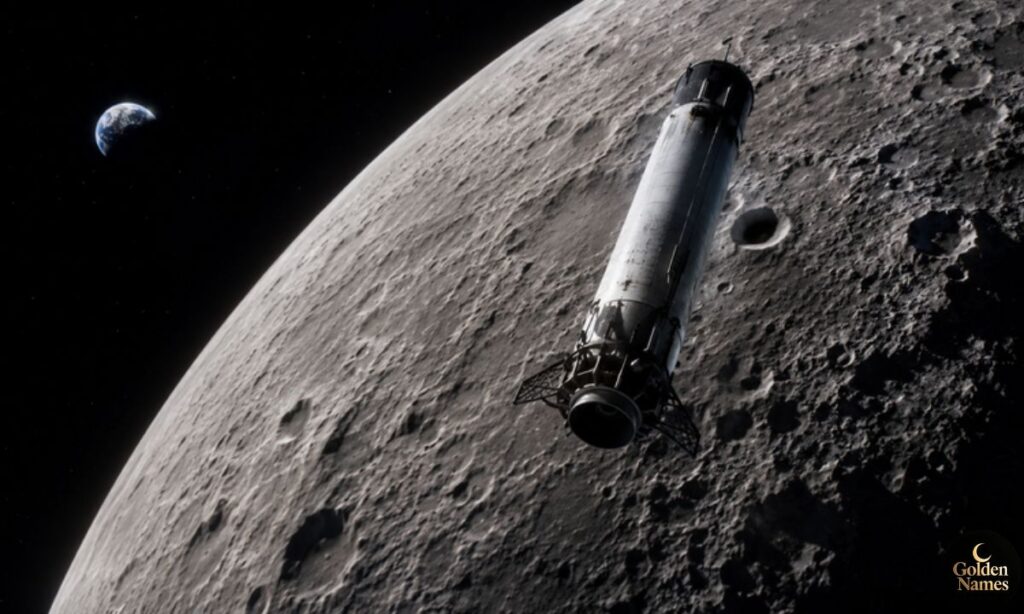
Let’s start with the facts. The object that impacted the moon was the second stage of a SpaceX Falcon 9 rocket. To give you a sense of scale, we’re talking about a chunk of debris roughly the size of a school bus,about 45 feet long and 12 feet wide, weighing in at 8,800 pounds (4 metric tons). That’s approximately the weight of an SUV.
This debris had been circling in space since early 2025, when the Falcon 9 launched with two lunar landers on board. The lower stage of the rocket did what it was supposed to do—it fired its engines, accomplished its job, and then got recovered for reuse (that’s part of SpaceX’s whole sustainable spaceflight model). But the upper stage? After delivering the lunar landers to their trajectory, it was essentially abandoned. It just kept coasting through space on a path that astronomers eventually realized would lead straight to the moon.
The impact occurred early Wednesday morning, August 5, in the lunar region near the Einstein Crater. When that hunk of metal hit the lunar surface, it was moving at approximately 8,700 kilometers per hour. The collision released energy equivalent to nearly 3 tons of TNT exploding.
How Did Scientists Know This Was Coming?
Here’s where it gets interesting. Nobody at SpaceX was probably checking their calendar thinking, Yep, our rocket stage is about to pancake itself on the moon. Instead, independent astronomers using publicly available tracking data figured it out.
That’s right. Amateur astronomers and space enthusiasts with access to orbital tracking information managed to predict this collision before anyone else called it out. They ran the numbers on the Falcon 9 upper stage’s trajectory and realized it wasn’t going to miss the moon. It was going to hit it.
This actually sparked some important conversations. If independent observers could predict this, why wasn’t SpaceX actively monitoring their own hardware? And more broadly, should space agencies have better systems in place to track and actively manage rocket stages left in orbit?
For context, SpaceX’s approach isn’t unusual. Launching rockets is expensive, and launching extra fuel to alter the trajectory of spent stages before abandoning them is even more expensive. Most space agencies follow the same protocol,complete your primary mission, then let the spent hardware coast into whatever orbit it’ll naturally follow. If that happens to lead to a lunar impact years later, well, that’s just how things work. It’s standard practice, not negligence.
The Crater It Created
When the Falcon 9 second stage smashed into the lunar surface, it carved out a new crater. Scientists estimate the impact zone is roughly 100 feet wide and as deep as 16 feet in some spots. That might not sound huge in cosmic terms, but it’s significant enough to be detected and studied.
Here’s what made this particularly valuable from a scientific perspective: astronomers actually watched it happen. The European Southern Observatory’s Very Large Telescope, stationed at the Paranal Observatory in Chile, detected the impact. Researchers monitoring the impact noticed something fascinating,the collision kicked up sodium and lithium gases that remained visible in the impact plume for about 5 to 10 minutes after the crash.
That observation matters because it tells scientists something about what happens when fast-moving objects slam into the lunar surface. It gives them data about crater formation, dust dynamics, and the composition of materials thrown up during impact. These are the kinds of insights that help researchers understand how the moon has been shaped by billions of years of cosmic bombardment.
Why This Isn’t a Disaster (But Should Still Concern Us)
Let me be clear: this crash didn’t threaten Earth. It didn’t damage any active lunar missions or equipment. No astronauts were in danger. The moon, frankly, takes a beating on a daily basis from meteorites and cosmic debris. Our lunar neighbor gets pounded by space rocks regularly.
Dr. Carl Schmidt, a planetary scientist at Boston University’s Center for Space Physics, put it in perspective: There’s only so many times where events like this will occur, and it gives us a chance to understand how the atmosphere of the moon works.
The moon doesn’t have an atmosphere like Earth does, but it has a tenuous exosphere—a thin layer of particles. Understanding how impacts affect this thin atmosphere helps scientists piece together the bigger picture of the moon’s geology and physics.
That said, this incident does highlight something worth thinking about. As more companies launch rockets and more space missions accumulate, more hardware gets left in orbit. Not all of it will hit the moon. Some will stay in Earth orbit forever, creating what’s known as space debris. Others, like this Falcon 9 stage, will eventually collide with celestial bodies.
It’s like leaving your trash everywhere and hoping it doesn’t cause problems. Eventually, it probably will.
The Bigger Picture: Space Junk and Orbital Management
The SpaceX crash highlights a genuine challenge facing space agencies and commercial companies worldwide: how do you manage all the equipment you leave behind?
Since humans started launching rockets in the 1950s, we’ve accumulated massive amounts of debris in Earth orbit. Dead satellites, spent rocket stages, fragments from collisions—there’s a lot of stuff up there. And unlike an actual landfill, orbital trash doesn’t stay neatly contained. Objects orbit at incredible speeds and can collide with active spacecraft.
But the conversation extends beyond Earth orbit. As more companies plan lunar missions and deeper space exploration, the question of debris management becomes urgent. Do we need international regulations? Should companies be required to actively de-orbit spent stages or deliberately crash them into the lunar surface in designated impact zones?
These questions don’t have easy answers. Implementing systems to manage and de-orbit rocket stages costs money and fuel. Adding extra propellant to your launch means higher costs and reduced payload capacity. It’s a calculus that needs to balance practical economics with responsible stewardship.
What Makes the SpaceX Falcon 9 Significant
The Falcon 9 has become one of the most-used rockets on the planet. Since its first flight in 2010, SpaceX has launched hundreds of these rockets. They’ve become the workhorse of both commercial and government space missions. The reusable first stage has revolutionized how people think about rocketry and costs.
That first stage gets recovered, inspected, refueled, and flown again. That’s remarkable. But the second stage? It’s still expendable. It does its job and gets abandoned. Eventually, something like what we saw on August 5 was inevitable. It was just a matter of when and where.
This particular rocket’s cargo was notable: it was carrying two lunar landers. One from Firefly Aerospace (called Blue Ghost) and one from ispace (called Resilience). These landers had important missions—delivering equipment and conducting experiments on the lunar surface. The second stage successfully got them to their trajectory. Its job was done. Then it just kept coasting, waiting.
How Impact Detection Works
You might be wondering: if this impact happened early in the morning, how did anyone see it? The moon is pretty far away, after all.
Scientists used several methods. The European Southern Observatory’s Very Large Telescope can focus on extremely faint objects and events. When researchers aimed these telescopes at the predicted impact zone, they caught the fireball and subsequent light emissions.
Additionally, scientists have been developing increasingly sophisticated methods to detect these kinds of events. Instruments designed to spot faint light changes can pick up the flash from a rocket stage striking the lunar surface. It’s like they’re listening to the moon with sophisticated sensors rather than literally watching it.
This detection capability is relatively new. A decade ago, catching something like this would have been much harder. As technology improves and more observatories become equipped with these instruments, we’ll likely catch more of these impacts and gather more data.
Implications for Future Lunar Missions
The crash raises practical questions for companies and agencies planning future moon missions. NASA is working on the Artemis program, aimed at returning humans to the moon. SpaceX itself is developing Starship, which will eventually carry astronauts to the lunar surface. Private companies like Blue Origin are building lunar landers.
All of these missions need to happen in an environment that’s increasingly getting cluttered with hardware. Not just working equipment, but also abandoned stages, crashed satellites, and other debris from failed missions.
The crash near the Einstein Crater suggests we need better tracking, better management protocols, and probably international agreements about where and how to conduct controlled impacts when necessary.
The Science We Gained
Despite the somewhat mundane nature of the event,a piece of hardware doing exactly what orbital mechanics would predict,scientists did extract valuable data.
The impact provided a natural experiment in crater formation. The light signatures detected, the dust and gas thrown up, the thermal signature, all of this tells researchers things about the lunar surface composition and the dynamics of high-speed impacts.
For planetary scientists, these rare opportunities to observe impacts on the moon with modern instruments are genuinely valuable. They help validate computer models of impact physics and crater formation that scientists use to study the geological history of the moon and other planets.
Looking Forward: Managing the Growing Space Traffic
As space exploration accelerates, management of orbital debris becomes increasingly important. SpaceX isn’t the only company launching rockets. China, the European Space Agency, India, Japan, and dozens of other countries and private companies are all increasing their launch rates.
The International Astronomical Union and various space agencies have started discussing standards for managing upper stages and preventing debris creation. Some proposals include:
Using extra fuel to de-orbit stages or crash them in controlled locations. Designing stages to burn up during re-entry rather than leaving metal fragments in orbit. Tracking all objects larger than a certain size and predicting collisions. Establishing protected zones where only active satellites operate.
These approaches have costs, but the alternative,a cascading debris environment where collisions create more debris,is worse.
The Human Element
What’s easy to forget is that space exploration involves actual people making decisions about risk, cost, and responsibility. The engineers at SpaceX who designed that Falcon 9 weren’t thinking about failure. They were thinking about success,getting those lunar landers to the moon.
The astronomers who predicted the crash weren’t checking SpaceX’s work. They were doing what they love, tracking objects in space and making predictions about celestial mechanics.
The scientists who detected the impact were waiting for an event they’d anticipated, hoping to gather data that would help them understand the moon better.
In a strange way, this crash is a success story. The physics worked exactly as predicted. The impact happened where calculations said it would. The data was captured. The system worked.
What didn’t work as well is the broader system of managing space debris and staying accountable for hardware we launch. That part needs improvement.
Common Questions About the Crash
Why didn’t SpaceX prevent this
Preventing the crash would have required using fuel to change the rocket stage’s trajectory. That costs money with no additional benefit to SpaceX’s mission. The industry standard is to abandon hardware after it completes its primary purpose. This isn’t unique to SpaceX,it’s how all space agencies operate.
Does this prove SpaceX is irresponsible
Not really. This is industry-standard practice. The issue is bigger than one company. It’s a systemic problem across the entire space industry that will require industry-wide solutions.
Could the debris have hit Earth
No. The trajectory calculations showed clearly that this stage would miss Earth entirely and eventually collide with the moon. It was never a threat to our planet.
Is the moon damaged
The moon has trillions of craters already created over billions of years. One additional crater from a four-ton rocket stage is microscopically insignificant in geological terms. It’s not damaged,it’s just part of the ongoing impact process that constantly reshapes the lunar surface.
Will this affect lunar bases or future missions
The impact occurred in a region that doesn’t have any active equipment or infrastructure. Future missions can work around known impact sites or in different regions. It’s not a barrier to development.
Final Thoughts
The SpaceX Falcon 9 second stage crashing into the moon on August 5, 2026, was simultaneously mundane and significant. Mundane because it was entirely predictable, a consequence of standard industry practice. Significant because it’s a reminder that space exploration, even when successful, leaves traces.
As we enter a new era of rapid space development,with lunar bases potentially coming, asteroid mining being planned, and deep space missions becoming routine,we need to think more carefully about stewardship. That doesn’t mean stopping exploration. It means being smarter about how we do it.
The moon has survived impacts far more violent than a four-ton rocket stage for billions of years. But Earth’s orbital environment is more fragile. And the precedents we set now about managing space debris will shape how humanity’s presence in space evolves.For now, that SpaceX stage is just another crater on the moon. But it’s a crater that tells us something important about the choices we’re making and the infrastructure we’re creating as we reach outward into the cosmos.
1 thought on “SpaceX Rocket Crashes on the Moon: What Happened and Why It Matters”